



Infrastructure
Bitcoin
News Analysis
February 10, 2026

Binance กับวิกฤตความเชื่อมั่น: สรุปข้อเท็จจริงที่ต้องรู้
หลังจากที่ BTC ร่วงลงต่ำกว่า $75K ในช่วงต้นเดือนกุมภาพันธ์ Social media โดยเฉพาะบน X เต็มไปด้วยข้อกล่าวหาต่อ Binance รวมถึงการบอกให้คนรีบถอนเงินจาก Binance เพราะอาจเกิดเหตุแบบ FTX
แต่อะไรคือความจริง? อะไรคือ FUD? วันนี้เราจะพาไปดูข้อเท็จจริงออกจากข้อกล่าวหา โดยใช้ On-chain data, Official statements และข้อมูลจากแหล่งต่างๆ
ความกังวลส่วนใหญ่ย้อนกลับไปที่เหตุการณ์วันที่ 10 ตุลาคม 2025 ซึ่งถือเป็นหนึ่งในวันที่เลวร้ายที่สุดของตลาดคริปโต โดยมี Liquidation ทั่วตลาดรวมกันถึง 19,000 ล้านดอลลาร์ภายใน 24 ชั่วโมง
เหตุการณ์เริ่มต้นจากข่าวภาษีนำเข้าจากจีน 100% ที่ประธานาธิบดี Trump ประกาศ ซึ่งส่งผลให้ตลาดหุ้นทั่วโลกร่วงลงมากกว่า 1.5 ล้านล้านดอลลาร์ในวันเดียว และตลาดคริปโต ที่มี Leverage สูงในขณะนั้นก็ได้รับผลกระทบอย่างรุนแรง
Binance ตกเป็นเป้าโจมตีหลักจากเหตุการณ์นี้ โดยถูกกล่าวหาว่าระบบ Oracle มีปัญหา ทำให้ราคาของ USDe, BnSOL และ wBETH แสดงผลผิดพลาด จนทำให้นักลงทุนถูกบังคับ Liquidate ในราคาที่ต่ำกว่าความเป็นจริง
สิ่งที่น่าสังเกตที่สุดคือ USDe ซึ่งควรจะมีมูลค่าคงที่ที่ $1 กลับตกลงไปถึง $0.65 บน Binance แต่เมื่อตรวจสอบ On-chain data บน Curve และ DeFi platforms อื่นๆ กลับพบว่า USDe ยังคงมีราคาอยู่ที่ ~$1 ตลอดเวลา ซึ่งแสดงให้เห็นว่าปัญหานี้เกิดขึ้นเฉพาะบน Binance เท่านั้น
บางคนมองว่าวิกฤตครั้งส่วนหนึ่งเกิดจาก การที่ Binance ที่เปิดช่องให้เกิดการทำ Yield Farming และการ Leverage ของเหรียญ USDe แบบที่ทำให้เกิดคามเสี่ยงระดับสูง โดยมีรายละเอียดดังนี้:
ดังนั้น เมื่อเกิด Macro Shock จนราคา BTC/ETH ร่วงรุนแรง ทำให้การ Overleverage อยู่ก็ย้อนกลับมาทำลายระบบ:
ตามรายงานเป็นทางการของ Binance เมื่อวันที่ 31 มกราคม 2026 ทาง Binance ได้ออกมาปฏิเสธข้อกล่าวหา โดยเพียงยอมรับว่ามีปัญหาเทคนิค 2 จุดที่เกิดขึ้นในวันนั้น แต่ความผิดพลาดของแพลตฟอร์มไม่ได้เป็นสาเหตุในการทำให้เกิดตลาด Crash
จุดแรกคือระบบโอนเงินภายในที่ทำงานช้าลงเป็นเวลา 33 นาที เนื่องจาก Database performance regression หลังจากการ Upgrade cloud provider และจุดที่สองคือ Index pricing ของ USDe, WBETH และ BNSOL ที่คำนวณผิดพลาดเพราะ Overweight orderbook ของ Binance เองมากเกินไป

Binance ยืนยันว่า 75% ของ Liquidation ทั้งหมดเกิดขึ้นก่อนที่ปัญหาเทคนิคเหล่านี้จะเกิด ซึ่งหมายความว่าสาเหตุหลักมาจาก Macro shock ไม่ใช่ปัญหาของแพลตฟอร์ม โดย Binance ได้จ่ายเงินชดเชยรวม 328 ล้านดอลลาร์ให้กับผู้ได้รับผลกระทบโดยตรง และมีโปรแกรม Together Initiative เพิ่มเติมอีก 100 ล้านดอลลาร์ รวมเป็น 428 ล้านดอลลาร์
แม้เวลาจะล่วงเลยมาถึงกุมภาพันธ์ 2026 แต่วงการคริปโตยังคง เสียงแตก ต่อเหตุการณ์ในวันที่ 10 ตุลาคมที่ผ่านมา โดยการวิเคราะห์ถูกแบ่งออกเป็นสองฝั่งหลัก:
1️⃣ ฝั่ง Defensive: "ไม่ใช่ความผิดของ Platform แต่เป็นระบบที่ Over-leverage"
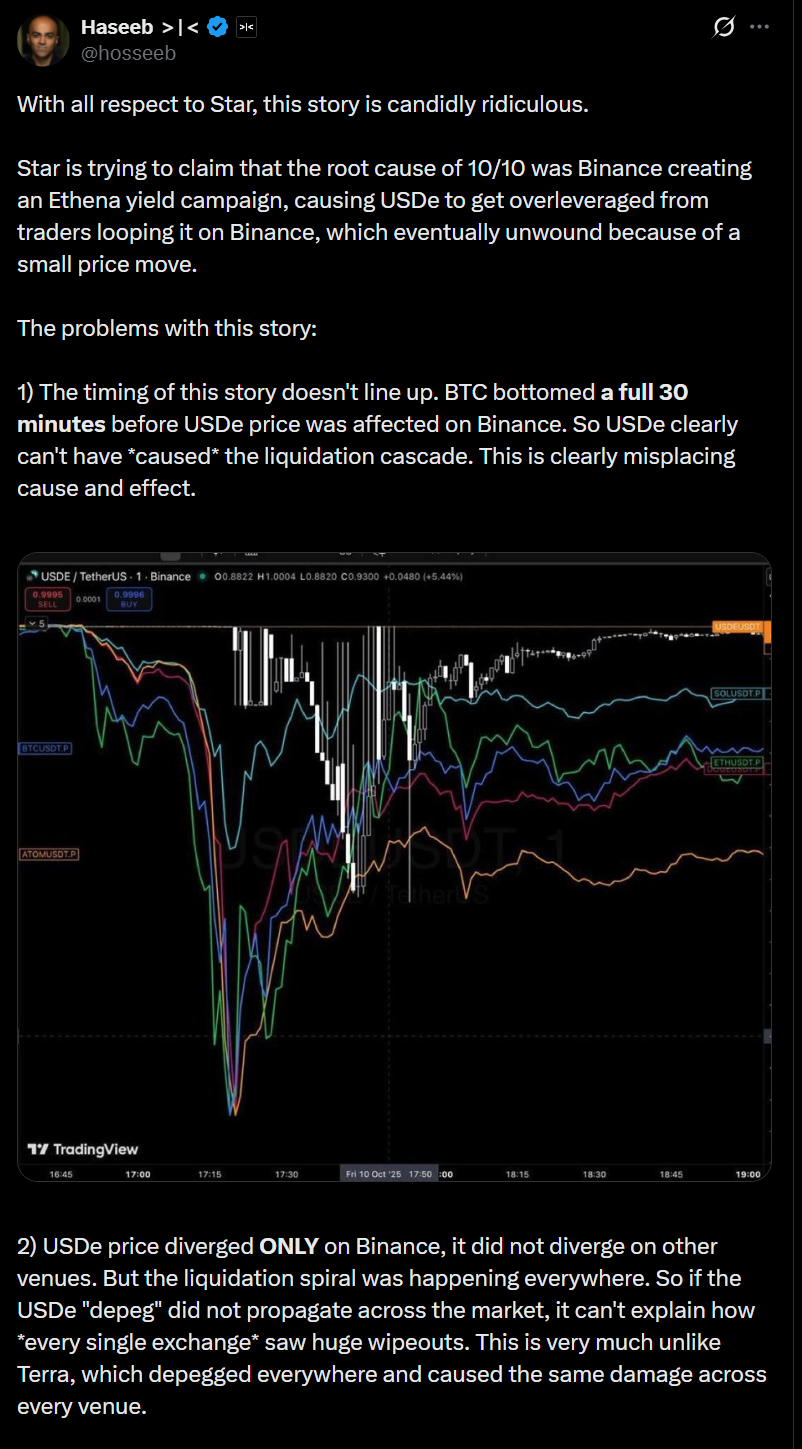
2️⃣ ฝั่ง Critics: "Misleading Marketing และความบกพร่องเชิงโครงสร้าง"
ความจริงของเหตุการณ์นี้อาจไม่ได้อยู่ที่ฝ่ายใดฝ่านหนึ่ง แต่อาจเป็น The Perfect Storm ที่เกิดจากการประจวบเหมาะของ 4 ปัจจัย อย่าง Macro Shock, Leverage ระดับสูง, Aggressive USDe Marketing, และความผิดพลาดทางเทคนิคบน Binance
อย่างไรก็ตาม สิ่งที่เกิดขึ้นคือทำให้เกิดวิกฤติศรัทธาต่อ Binance ซึ่งมีส่วนทำให้กลายเป็นชนวนที่ทำให้เกิดความไม่ไว้วางใจและ FUD ระลอกใหม่ที่ยังคงดำเนินต่อมาจนถึงทุกวันนี้
ในช่วงเดือนกุมภาพันธ์ เริ่มมีข้อกล่าวหา Binance มาใหม่ที่ถูกพูดถึงอย่างมากบน X ที่มาพร้อมกับ BTC ร่วงรุนแรงลงต่ำกว่า $75K เช่น
❌ "Binance/CZ dump BTC $1B"
❌ "SAFU fund manipulation"
❌ "Withdrawal crisis กำลังเกิด"
❌ "CZ ยกเลิก supercycle"
มาดูทีละข้อว่าอะไรจริง อะไรไม่จริง 👇
ข่าวลือแรกตือเรื่องการเทขาย Bitcoin มูลค่ากว่า 1 พันล้านดอลลาร์ในช่วงวันเสาร์ ซึ่งเป็นช่วงที่ Liquidity ต่ำมาก โดยอาจเป็นการจงใจบีบให้ราคาหลุดแนวรับสำคัญ
📊 หลักฐานที่นำมาใช้อ้าง:
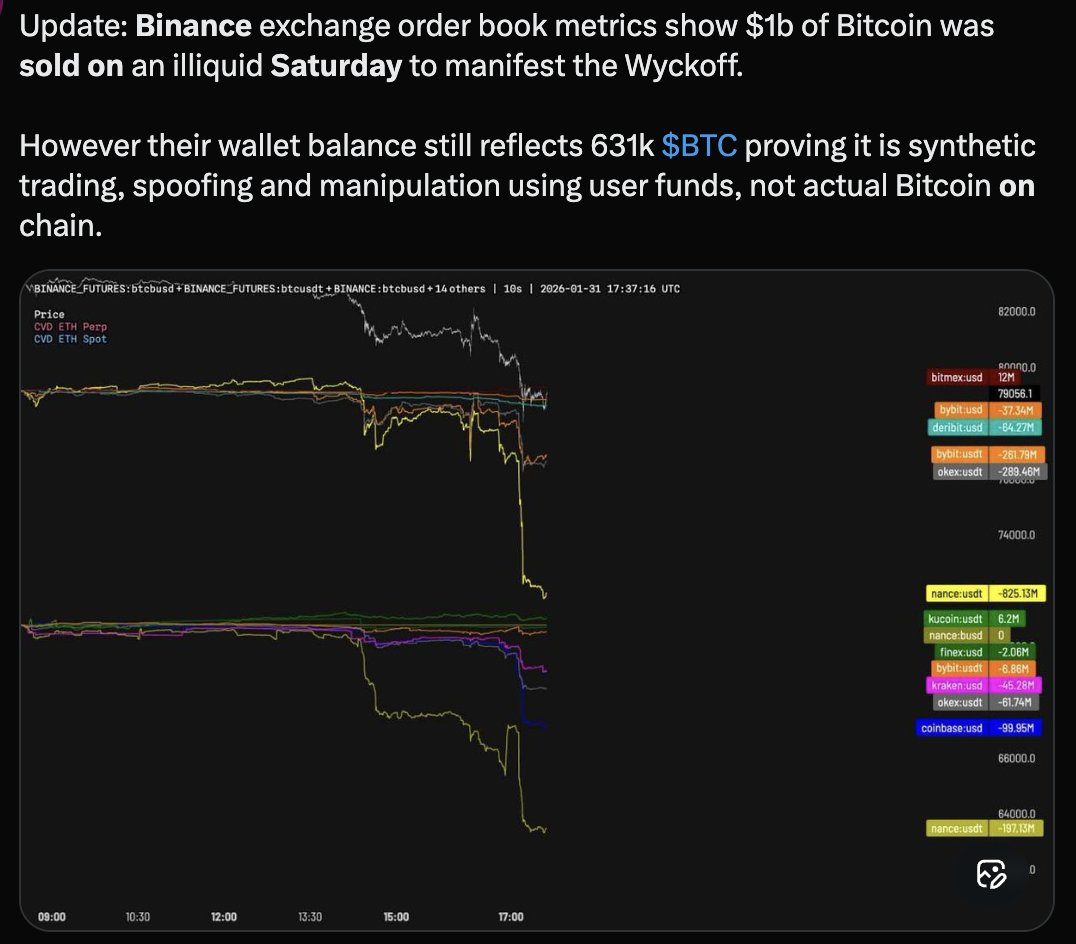
🛡️ การตอบโต้จากฝั่ง Binance: CZ ออกมาชี้แจงว่าปรากฏการณ์นี้เกิดจาก User ขายเอง ซึ่งเป็นการเปลี่ยนมือใน Ledger ของ Exchange (Off-chain) ทำให้ยอด Wallet รวมไม่เปลี่ยนแปลง และไม่ได้เกิดจาก Binance เป็นผู้ขาย
⚖️ Verdict: ในเชิงโครงสร้างเราต้องยอมรับว่า CEX คือ Black Box ตราบใดที่ธุรกรรมไม่ได้เกิดขึ้น On-chain เราไม่มีทางพิสูจน์ได้ 100% ว่าแรงขายมูลค่า $1B นั้นมาจากใครกันแน่
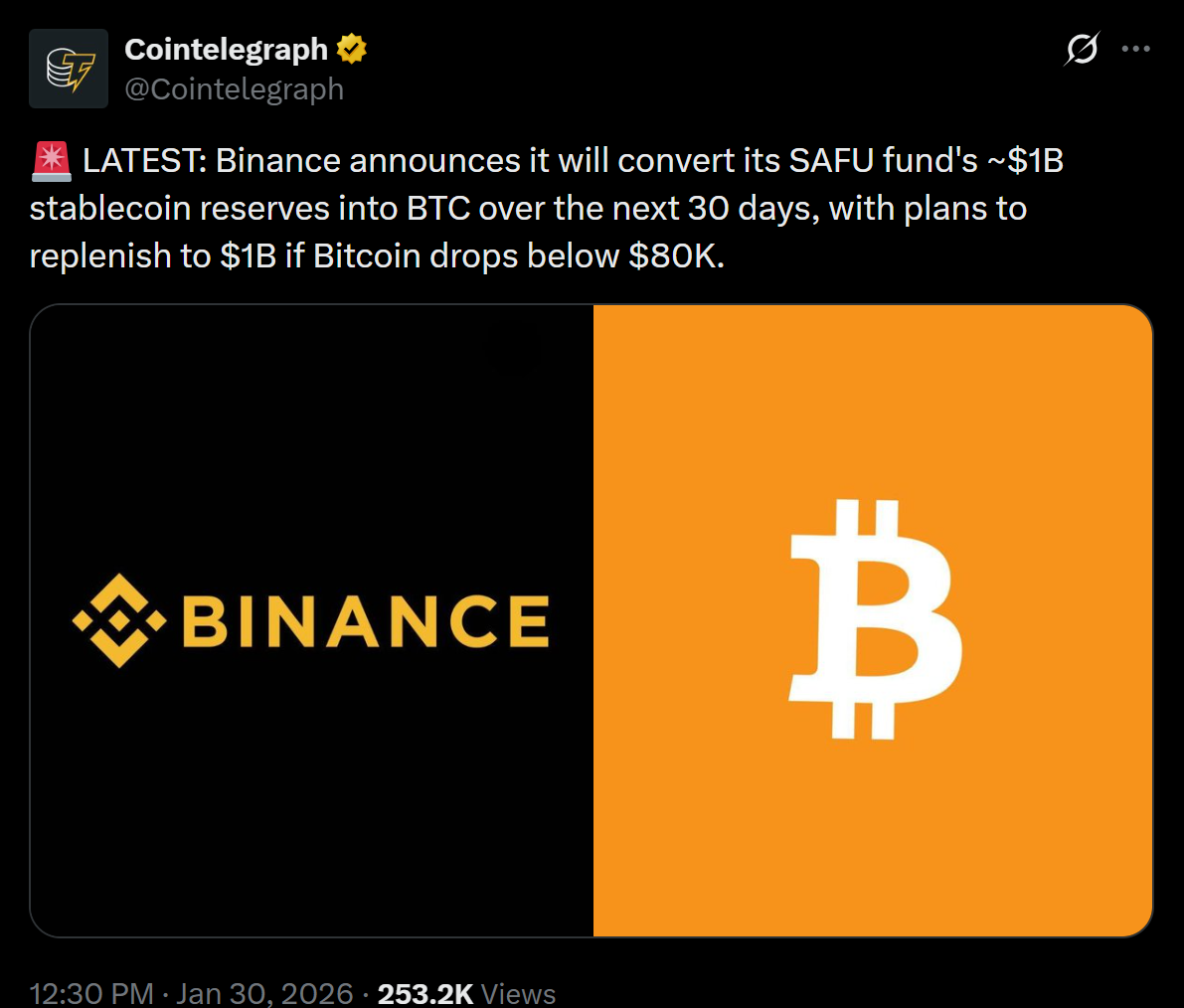
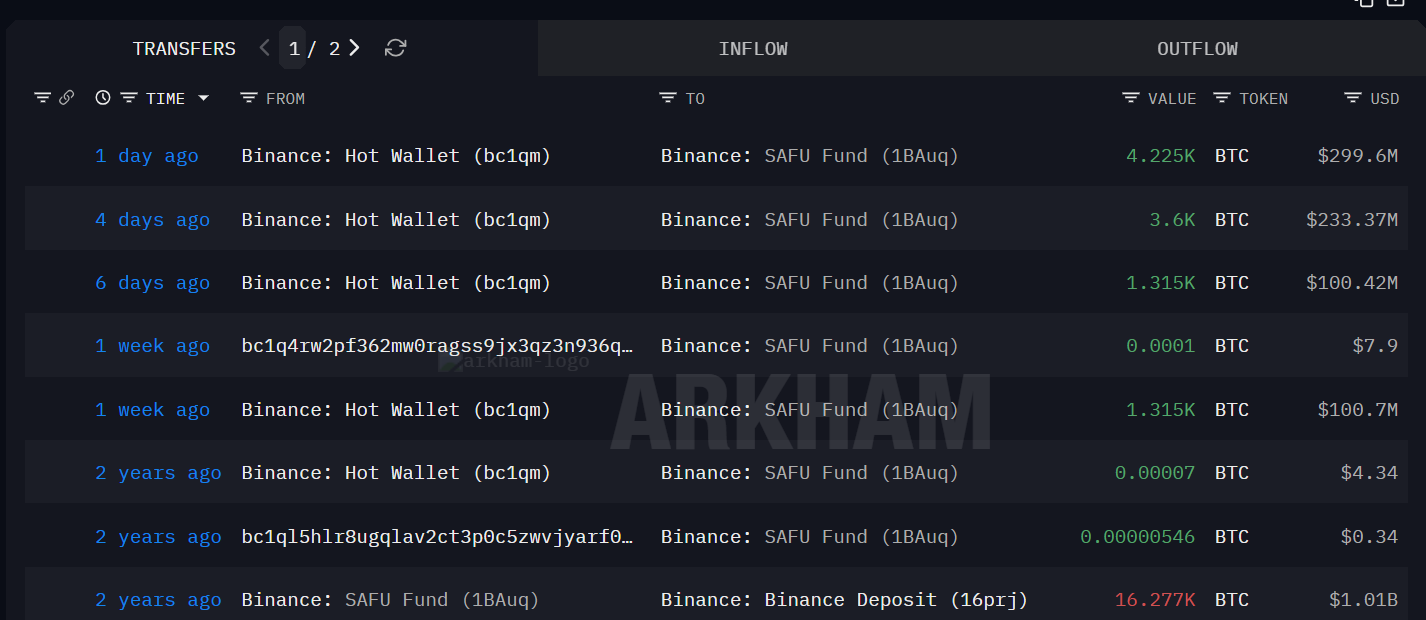
หลังจากการประกาศเมื่อวันที่ 29 มกราคม 2026 ว่า Binance จะทำการแปลงสินทรัพย์ในกองทุน SAFU มูลค่า 1,000 ล้านดอลลาร์ จาก Stablecoins เป็น Bitcoin ภายใน 30 วัน ข้อมูล On-chain ล่าสุดเราจะเห็นว่ามีการซื้อไปแล้ว 4 รอบ รวมประมาณ 10,455 BTC (มูลค่า ~$721M)
🚩 ประเด็นที่ถูกจับตามอง: เกิดทฤษฎีสมคบคิดว่า Binance อาจใช้กลยุทธ์สองทาง คือการปล่อยให้เกิดแรงเทขาย (จากข้อ 3) เพื่อกดราคาลงมาในโซนต่ำ ก่อนจะใช้เงินกองทุน SAFU เข้ามาช้อนซื้อ (Buy the Dip) ในราคาที่ถูกกว่าปกติหรือไม่?
🛡️ การตอบโต้จาก CZ: CZ และทีมงานยืนยันว่านี่คือการทำตาม Transparent Policy ที่ประกาศไว้ล่วงหน้า และจำนวนเงิน 1,000 ที่จะทยอยซื้อในช่วง 30 วันนั้นคิดเป็นเพียง 0.06% ของ BTC Market Cap เท่านั้น ซึ่งเล็กน้อยเกินกว่าจะสร้างผลกระทบราคาแบบมีนัยสำคัญได้
⚖️ Verdict: แม้จะไม่มีหลักฐานการทุจริต แต่สิ่งที่ปฏิเสธไม่ได้คือ Timing ที่ถือว่าค่อนข้างแม่นยำ:

ท่ามกลางความผันผวน เราเริ่มเห็นแฮชแท็กอย่าง #BoycottBinance และคำเตือนเรื่องวิกฤตการถอนเงิน เริ่มกลับมาแพร่สะพัดอีกครั้ง โดยมีการนำไปเปรียบเทียบกับเหตุการณ์ล่มสลายของ FTX และเตือนให้นักลงทุนถอนเงินออกจาก Binance
🚩 ประเด็นความกังวล: Social Sentiment บน X พยายามชี้ให้เห็นว่ามีปริมาณ Net Outflow มหาศาล และ Binance อาจประสบปัญหาขาดสภาพคล่องจนไม่สามารถรองรับการถอนเงินได้
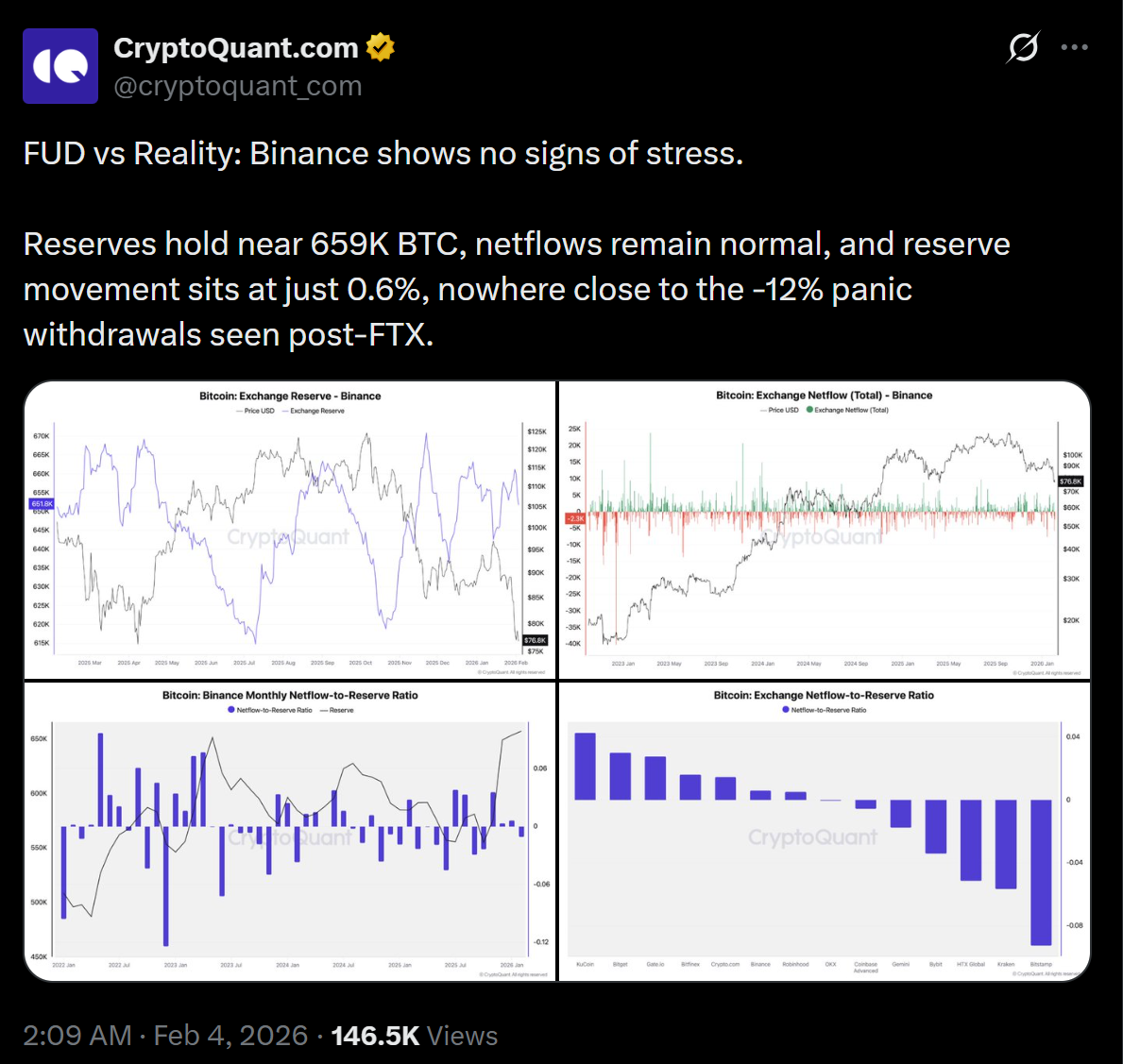
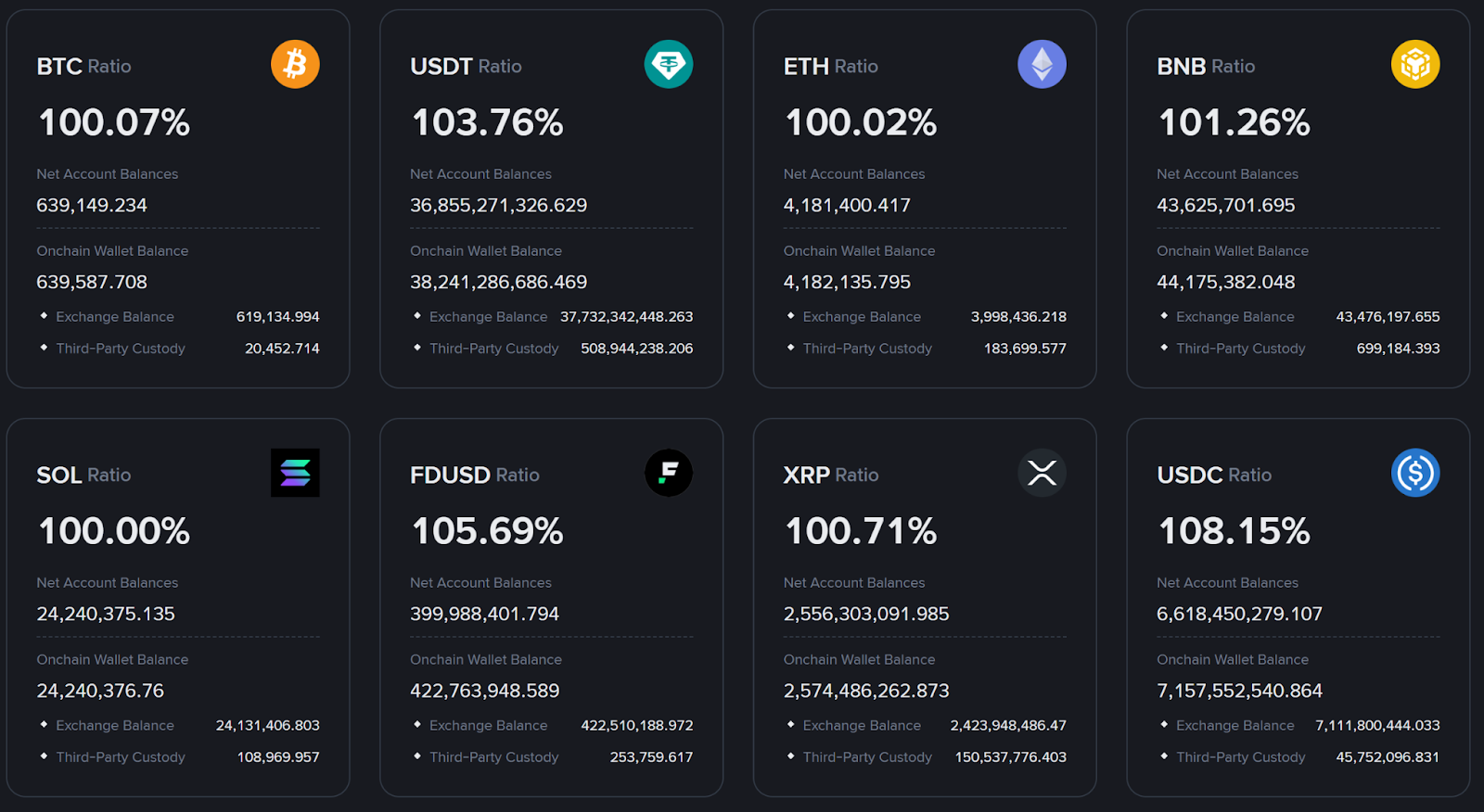
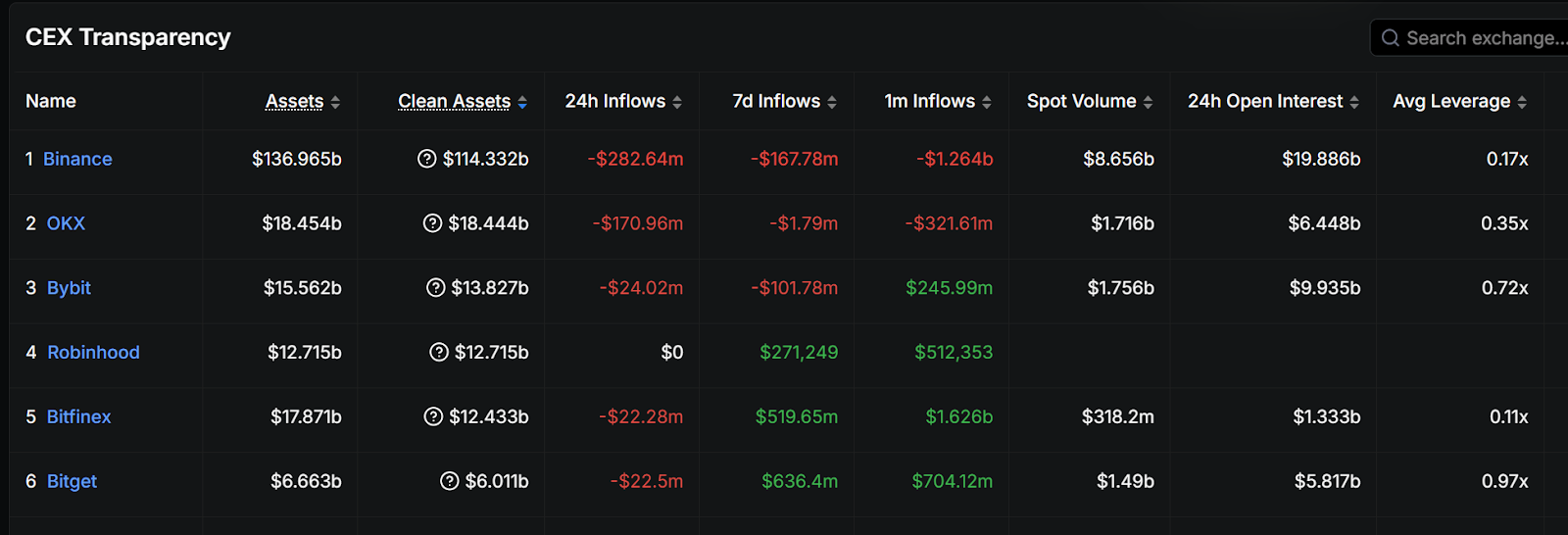
📊 Data-Driven Reality: เมื่อดูผ่านข้อมูลจากการรายงานของ CryptoQuant (หรือสามารถเช็ค Onchain เองได้) และจากการรายงาน Proof of Reserve ของทาง Binance เราจะเห็นได้ว่า:
ท่ามกลางความผันผวน เราเริ่มเห็นแฮชแท็กอย่าง #BoycottBinance และคำเตือนเรื่องวิกฤตการถอนเงิน เริ่มกลับมาแพร่สะพัดอีกครั้ง โดยมีการนำไปเปรียบเทียบกับเหตุการณ์ล่มสลายของ FTX และเตือนให้นักลงทุนถอนเงินออกจาก Binance
🚩 ประเด็นความกังวล: Social Sentiment บน X พยายามชี้ให้เห็นว่ามีปริมาณ Net Outflow มหาศาล และ Binance อาจประสบปัญหาขาดสภาพคล่องจนไม่สามารถรองรับการถอนเงินได้
📊 Data-Driven Reality: เมื่อดูผ่านข้อมูลจากการรายงานของ CryptoQuant (หรือสามารถเช็ค Onchain เองได้) และจากการรายงาน Proof of Reserve ของทาง Binance เราจะเห็นได้ว่า:
⚖️ Verdict: ในปัจจุบันยังไม่มีสัญญาณของ Bank Run โดยข้อมูล On-chain ยืนยันว่าการถอนเงินยังคงทำงานเป็นปกติ และไม่มีความผิดปกติของ Processing Time ที่น่ากังวล อย่างไรก็ตาม PoR ยังคงมีข้อจำกัดเรื่องการไม่เปิดเผยหนี้สินภายนอก (Liabilities) และการขาด Third-party Auditor ซึ่งนักลงทุนยังคงต้องติดตามความโปร่งใสในจุดนี้ต่อ
อีกหนึ่งปัจจัยที่กระทบต่อ Sentiment คือการที่ CZ ซึ่งเคยเป็นกระบอกเสียงฝั่ง Bullish มาตลอด กลับออกมาแสดงท่าทีที่เปลี่ยนไปเกี่ยวกับแนวคิด Crypto Supercycle
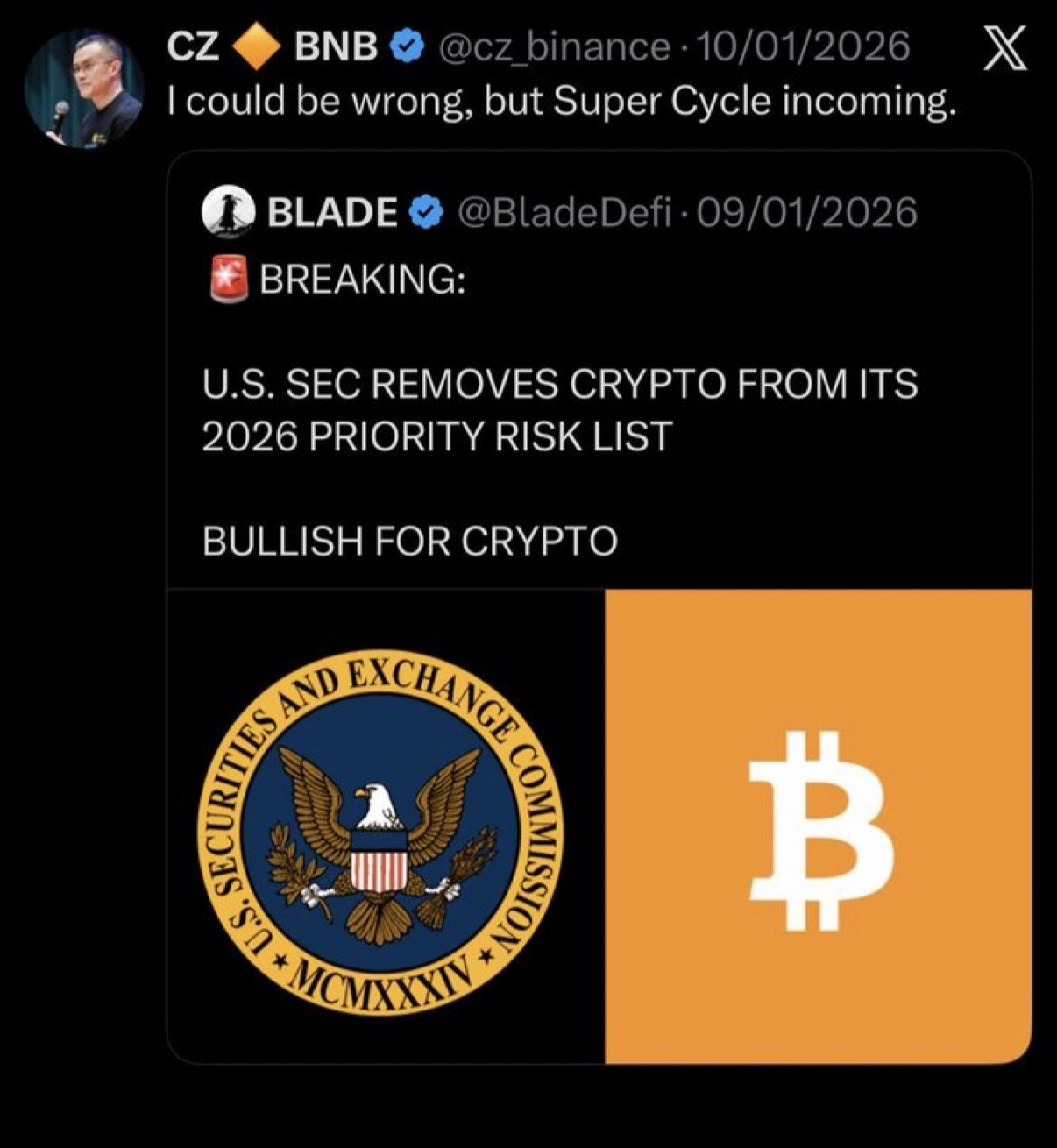

🚩 ประเด็นที่ถูกตั้งคำถาม: หลังจากที่ CZ เคยมองบวก Crypto Supercycle มาตลอด แต่ล่าสุดกลับออกมาบอกว่า "Less confident" ทำให้เกิดข้อกล่าวหาว่า Binance รู้อะไรที่ตลาดไม่รู้ หรือกำลังจะ Dump ตลาด หรือไม่?
🛡️ การอธิบายจาก CZ: CZ ออกมาบอกผ่าน X ส่วนตัวของเขาว่า เขาแค่บอกว่า "Less confident than before" โดยอธิบายว่านี่คือความเห็นส่วนตัวที่เปลี่ยนไปตาม Market sentiment ปัจจุบัน โดยเฉพาะ FUD ที่มากเกินไปทำให้บรรยากาศตลาดไม่เอื้ออำนวยต่อ Supercycle เหมือนที่เคยคาดหวังไว้
⚖️ Verdict: ในโลกของการลงทุน การปรับเปลี่ยนความคิดเห็นตามสภาวะตลาดถือเป็นเรื่องปกติ และอาจไม่เกี่ยวข้องกับการ Manipulate หรือ Insider Information อย่างที่หลายคนกังวลก็ได้ ซึ่งการที่ CZ ออกมาพูดเช่นนี้อาจเป็นการให้นักลงทุน Manage Expectation ท่ามกลางความไม่แน่นอนของตลาด
สุดท้ายแล้ว Supercycle จะเกิดขึ้นหรือไม่ ไม่ได้ขึ้นอยู่กับความมั่นใจของใครคนใดคนหนึ่ง แต่ขึ้นอยู่กับ Fundamental Adoption และ Liquidity ที่ไหลเข้าสู่ระบบ ซึ่งเป็นสิ่งที่เราต้องติดตามกันต่อไปในระยะยาว
จากการเจาะลึกข้อกล่าวหาทั้งหมด เราสามารถสรุปภาพรวมของวิกฤตความเชื่อมั่นรอบนี้ได้เป็น 3 ประเด็นสำคัญ:
1️⃣ Operational Risk vs. Market Manipulation: Binance มีข้อผิดพลาดทางเทคนิคจริงในช่วง Flash Crash (10/10) ซึ่งเป็นบทเรียนเรื่องความเสถียรของ Oracle และระบบภายใน แต่หลักฐาน On-chain ยังไม่เพียงพอที่จะฟันธงว่ามีการจงใจ Manipulate ตลาด
2️⃣ Reserves Resilience: จากข้อมูล On-chain ปัจจุบัน Binance ยังคงมีสถานะ Solvent โดยมี Reserves ที่ยังแข็งแกร่งและยังไม่มีการเกิด Bank Run ถึงแม้ว่า การรายงาน PoR จะมีข้อจำกัดอยู่บ้าง
Risk Management: ถ้ายังต้องใช้ CEX ในการเทรด ควรมีการกระจายความเสี่ยงไปยังหลาย Platform และไม่ควรเก็บเงินทั้งหมดไว้ที่เดียว
_____________________________________________________
Following Bitcoin's drop below $75K in early February, social media—especially on X—has been flooded with allegations against Binance, including calls for users to immediately withdraw their funds due to fears of an FTX-like event.
But what is the truth, and what is merely FUD? Today, we will separate fact from fiction by using on-chain data, official statements, and various information sources.
Most of the concerns trace back to the events of October 10, 2025, which is considered one of the worst days for the crypto market, with total market-wide liquidations reaching $19 billion within 24 hours.
The event was triggered by news of a 100% import tariff on China announced by President Trump, which caused global stock markets to plummet by more than $1.5 trillion in a single day. The crypto market, which was highly leveraged at the time, was also severely impacted.
Binance became the main target of criticism regarding this event, with allegations that its Oracle system malfunctioned, causing the prices of USDe, BnSOL, and wBETH to display incorrectly, leading to investors being forcibly liquidated at prices lower than reality.
The most notable point was USDe, which should have held a stable value of $1 but dropped as low as $0.65 on Binance. However, when checking on-chain data on Curve and other DeFi platforms, it was found that USDe maintained a price of ~$1 throughout, indicating that this issue occurred specifically on Binance.
Some believe that part of the crisis stemmed from Binance allowing Yield Farming and USDe leveraging in a way that created high-level risk, with details as follows:
Consequently, when a Macro Shock occurred and BTC/ETH prices fell sharply, the over-leveraging reversed and destroyed the system:
According to Binance's official report on January 31, 2026, Binance denied the allegations, only admitting to two technical issues that occurred that day, but asserting that platform errors were not the cause of the market crash.
The first point was that the internal transfer system slowed down for 33 minutes due to database performance regression following a cloud provider upgrade. The second point was that the Index pricing for USDe, WBETH, and BNSOL was miscalculated because it overweighted Binance's own order book too heavily.
Binance confirmed that 75% of all liquidations occurred before these technical issues arose, meaning the primary cause was the Macro shock rather than platform problems. Binance has paid a total of $328 million in compensation to those directly affected, plus an additional $100 million through the "Together Initiative" program, totaling $428 million.
Even though time has passed until February 2026, the crypto industry remains divided over the events of last October 10th. The analysis is split into two main sides:
1️⃣ Defensive Side: "It wasn't the platform's fault, but rather a system that was over-leveraged."
- Haseeb Qureshi (Dragonfly Capital): Argued that although USDe depegged specifically on Binance, the liquidation pressure occurred simultaneously across all exchanges. This indicates that the true cause was the Macro Shock and a general leverage bubble across the entire market, rather than the failure of a single platform.
- Seraphim Czecker (formerly of Ethena Labs): Added the perspective that the market collapsed because the industry is filled with Altcoins lacking organic demand. When hit by external factors, it revealed that there was no underlying buying pressure to support them.
2️⃣ Critics Side: "Misleading Marketing and Structural Failures"
- Star Xu (CEO, OKX) & Critic Groups: View the root cause as Binance’s aggressive marketing, which promoted high yields without warning of the risks. They liken this to incentivizing retail investors to shoulder the risk of a "leverage loop," leading to widespread damage.
- The Oracle Problem: Other analysts view the fact that USDe depegged only on Binance as evidence of a "Venue Problem" or a serious internal Oracle system failure that subsequently impacted other platforms.
The truth of this event may not lie with either single side, but rather in "The Perfect Storm" caused by the coincidence of four factors: the Macro Shock, high levels of leverage, aggressive USDe marketing, and technical errors on Binance.
Regardless, what transpired has caused a crisis of faith toward Binance, serving as the spark for a new wave of distrust and FUD (Fear, Uncertainty, and Doubt) that continues to this day.
In February 2026, new allegations against Binance began to be widely discussed on X, coinciding with a sharp Bitcoin drop below $75,000, such as:
❌ "Binance/CZ dump BTC $1B"
❌ "SAFU fund manipulation"
❌ "Withdrawal crisis occurring"
❌ "CZ cancels supercycle"
Let's look at each point to see what's true and what's not 👇
The first rumor concerned the sell-off of over $1 billion worth of Bitcoin on a Saturday—a period of very low liquidity. It was alleged that this was a deliberate attempt to force the price below key support levels.
📊 Evidence used for the claim:
Order Book Abnormalities: Large sell orders totaling over $1 billion were detected on the Binance side.
CVD (Cumulative Volume Delta) Divergence: The CVD value, an indicator of cumulative buying/selling pressure, hit a high negative of -$825M. This figure was unusually higher than all other exchanges combined.
Reserves Paradox: While massive selling pressure occurred, the balance in Binance’s BTC Wallet barely decreased (remaining stable at ~631K BTC). This led to allegations that Binance might be using user assets (User Funds) to manipulate the market without moving on-chain balances.
🛡️ Binance's Counter-argument: CZ clarified that this phenomenon was caused by users themselves selling, which is a change of hands within the exchange's ledger (Off-chain). This results in no change to the total wallet balance and did not originate from Binance as the seller.
⚖️ Verdict: Structurally, we must admit that CEXs (Centralized Exchanges) are a "Black Box." As long as transactions do not occur on-chain, there is no way to prove 100% who exactly the $1B in selling pressure came from.
Following the announcement on January 29, 2026, that Binance would convert $1 billion worth of assets in the SAFU fund from stablecoins to Bitcoin within 30 days, the latest on-chain data shows that 4 rounds of purchases have already been made, totaling approximately 10,455 BTC (value ~$721M).
🚩 Point of interest: A conspiracy theory has emerged suggesting that Binance might be using a two-pronged strategy: allowing sell pressure to occur (from point 3) to suppress the price into a lower zone, before using the SAFU fund to "Buy the Dip" at a cheaper-than-usual price?
🛡️ Response from CZ: CZ and the team insist that this is following a "Transparent Policy" announced in advance, and that the $1 billion being gradually purchased over 30 days accounts for only 0.06% of the BTC market cap—which is too small to have a significant impact on the price.
⚖️ Verdict: Although there is no evidence of corruption, what cannot be denied is the timing, which is considered quite precise:
Amidst the volatility, we have begun to see hashtags like #BoycottBinance and warnings about a withdrawal crisis starting to spread once again. These are being compared to the collapse of FTX, and investors are being warned to withdraw their money from Binance.
🚩 Point of Concern: Social sentiment on X is attempting to point out that there is a massive volume of Net Outflow and that Binance may be experiencing liquidity problems to the point of being unable to support withdrawals.
📊 Data-Driven Reality: When looking through data from CryptoQuant reports (or you can check on-chain yourself) and from Binance's own Proof of Reserve reports, we can see that:
- Stable & Clean Reserves: Binance's BTC reserves remain strong at nearly 659,000 BTC, with Total Assets reaching $136,965 million. Importantly, "Clean Assets" (excluding platform tokens) are high, at $114,332 million.
- Normal Netflow: The Reserve Movement rate is only 0.6%. Furthermore, the Net Outflow over the past 24 hours accounts for only 0.21% of total assets.
- Historical Context: Compared to the actual Panic Run that occurred during the post-FTX crisis—where withdrawals reached -12%—the current situation is still far from a point that could be called a liquidity crisis.
- Binance PoR: Binance's Proof of Reserve (PoR) reporting shows that assets are backed at a ratio greater than 1:1 in all cases.
⚖️ Verdict: Currently, there are no signals of a Bank Run. On-chain data confirms that withdrawals are still functioning normally, and there are no concerning abnormalities in processing times. However, PoR still has limitations regarding the non-disclosure of external liabilities and the lack of a third-party auditor, points on which investors must continue to monitor for transparency.
Another factor impacting sentiment is that CZ, who has consistently been a bullish voice, has shown a shift in his stance regarding the "Crypto Supercycle" concept.
🚩 The Questioned Point: After CZ had consistently maintained a positive outlook on the Crypto Supercycle, his recent statement of being "Less confident" has sparked allegations: Does Binance know something the market doesn't? Or are they planning to "dump" on the market?
🛡️ Explanation from CZ: CZ addressed this via his personal X account, clarifying that he only said he was "less confident than before." He explained that this is a personal opinion that shifted according to the current market sentiment—specifically noting that excessive FUD (Fear, Uncertainty, and Doubt) has created a market atmosphere that is no longer as favorable for a Supercycle as previously expected.
⚖️ Verdict: In the world of investing, adjusting one's opinion based on market conditions is normal and may not be related to manipulation or "insider information" as many fear. CZ's statement may simply be an attempt to help investors manage expectations amidst market uncertainty.Ultimately, whether a Supercycle occurs does not depend on the confidence of any single individual, but on fundamental adoption and the liquidity flowing into the system, which is something we must continue to monitor in the long term.
From our deep dive into all these allegations, we can summarize this current crisis of confidence into 3 key points:
1️⃣ Operational Risk vs. Market Manipulation: Binance did indeed experience technical errors during the Flash Crash (10/10), which serves as a lesson regarding the stability of Oracles and internal systems. However, on-chain evidence is currently insufficient to conclude that there was intentional market manipulation.
2️⃣ Reserves Resilience: Based on current on-chain data, Binance remains solvent with strong reserves, and no "Bank Run" has occurred, despite the inherent limitations of Proof of Reserve (PoR) reporting.
Investment Action Plan:


.png)

.jpg)
.jpg)


