


Infrastructure
DeFi
February 5, 2026

ส่อง PerpDEX หลัง Airdrop จบ: ใครรอด ฟาร์มตัวไหนต่อดี
หลังจากใบบทความที่แล้วที่เราได้พาไปดูสมรภูมิ PerpDEX War ที่ดุเดือดในช่วงปี 2025 พร้อมวิเคราะห์จุดแข็ง-จุดอ่อนของแต่ละโปรเจกต์กันไปแล้ว หลายคนคงมีคำถามสำคัญในใจว่า แล้วหลังจากจบศึกช่วงชิง User ด้วย Airdrop ไปแล้ว โปรเจกต์ไหนที่จะเป็นผู้ชนะต่อไปในระยะยาว และเราควรเลือกโปรเจกต์ PerpDEX ที่จะฟาร์มตัวต่อไปยังไง
บทความนี้เราจะวิเคราะห์ด้วยข้อมูล On-chain เพื่อตอบคำถามที่เหล่านักล่า Airdrop อยากรู้มากที่สุดว่า โปรเจกต์ที่แจกเหรียญไปแล้วอย่าง Hyperliquid หรือ Lighter มีสภาพเป็นอย่างไรหลังฝุ่นตลบ? User ยังอยู่หรือหายไปพร้อมกับเหรียญที่เทขาย? เพื่อเป็นประเด็นให้ได้ไปตัดสินใจหรือคิดต่อกันได้ว่า ในบรรดาโปรเจกต์ที่ยังไม่ออกเหรียญอย่างเช่น EdgeX, Variational, Extended ตัวไหนที่ควรค่าแก่การฟาร์มต่อไป
ปี 2025 ถือเป็นปีแห่ง Incentive War ของ PerpDEX โดยโปรเจกต์ต่างๆ ยอมทุ่มงบมหาศาลเพื่อดึงดูด Liquidity ผ่านระบบ Points และ Airdrop จนยอดการเทรดรายเดือนเคยพุ่งแตะระดับ 1.2 ล้านล้านดอลลาร์ในเดือนตุลาคม 2025 ส่งผลให้ Sector นี้กลายเป็นหนึ่งใน Narrative ที่ประสบความสำเร็จที่สุดสำหรับนักล่า Airdrop

ในปี 2025 Hyperliquid ถือเป็นโปรเจกต์ PerpDEX อันดับหนึ่ง ที่เคยขึ้นนำด้วย Market Share กว่า 70% แต่ปัจจุบัน ส่วนแบ่งการตลาดของ Hyperliquid ได้ร่วงลงเหลือประมาณ 20% เพราะว่ามีคู่แข่งเข้ามาจำนวนมาก
ในปี 2026 ถึงแม้เราจะเชื่อว่า Perp DEX จะยังเติบโตต่อไป และจะยังคงความเป็นหนึ่งใน Narrative ที่ได้รับกระแสนิยมต่อเนื่อง พร้อมกับโอกาสมหาศาล แต่ต้องยอมรับว่าโอกาสที่ว่าจะไม่ได้ง่ายเหมือนแต่ก่อน ด้วยปัจจัยหลายอย่าง ไม่ว่าจะเป็นการเข้ามาของผู้เล่นหน้าใหม่ รวมถึงสถานการณ์ภาพรวมของตลาดคริปโตฯที่ไม่ค่อยสู้ดี
ในพาร์ทต่อไปเราจะไปดูข้อมูล Onchain ของ Hyperliquid และ Lighter ว่าเกิดอะไรขึ้นบ้างอิงจากข้อมูล Onchain ต่างๆ เช่น Daily volume, Open Interest, และ TVL เป็นต้น
Hyperliquid คือ Case Study ที่แหกทุกกฎของ Airdrop Dump ข้อมูล On-chain หลังการแจกเหรียญ HYPE ในช่วงปลายปี 2024 จนถึงต้นปี 2026 โดยข้อมูล Onchain สะท้อนพฤติกรรมที่น่าสนใจดังนี้:
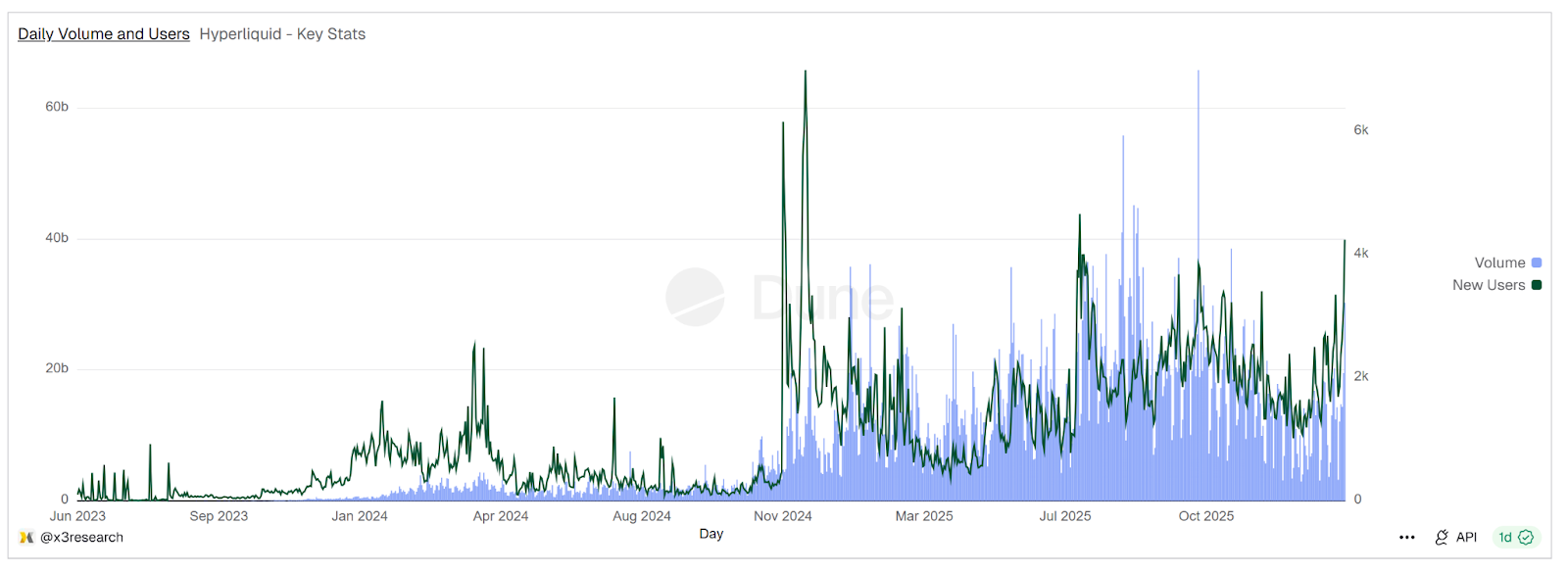
กราฟ Daily Volume and Users ของ Hyperliquid จาก Dune Analytics แสดงให้เห็นพฤติกรรมที่น่าสนใจมาก ซึ่งขัดแย้งกับความเชื่อที่ว่า แจก Airdrop แล้วคนจะหาย
โดยก่อนถึงวันที่ 29 พ.ย. เราจะเห็นเส้นสีเขียว (New Users) พุ่งขึ้นไปทำจุดสูงสุด (All-time High) ซึ่งอาจตีความว่าคือพฤติกรรม FOMO ของนักล่า Airdrop ที่พยายามเข้ามาสร้างตัวตนบน On-chain ในช่วงโค้งสุดท้าย
ในขณะที่ User พุ่งสูงมาก แต่ Volume (สีฟ้า) ในช่วงนั้นกลับไม่ได้พุ่งรุนแรงเท่า User สะท้อนว่าบัญชีใหม่ส่วนใหญ่เป็นการเข้ามาเพื่อทำธุรกรรมขั้นต่ำ (Sybil-like behavior) มากกว่าการเข้ามาเทรดจริงจัง
หลังจากผ่านช่วงแจก Airdrop ไปแล้ว จำนวนผู้ใช้ใหม่ (สีเขียว) ร่วงลงอย่างรวดเร็ว (Sharp Decline) ซึ่งเป็นพฤติกรรมปกติของกลุ่ม Mercenary Users ที่ย้ายไปฟาร์มโปรเจกต์อื่นต่อ
อย่างไรก็ตาม Trade Volume (สีฟ้า) ไม่ได้ร่วงตาม User แต่กลับยังรักษาระดับฐานที่สูงกว่าช่วงก่อนแจก Airdrop ได้ สิ่งนี้พิสูจน์ว่า Hyperliquid สามารถเปลี่ยนผู้ที่มาฟาร์มบางส่วนให้กลายเป็น Sticky Users หรือผู้ใช้งานจริงได้
ตั้งแต่ช่วงไตรมาส 2 ของปี 2025 เป็นต้นไป เราจะเห็นภาพที่ชัดเจนมากว่า Volume (สีฟ้า) เติบโตขึ้นอย่างมากจนแซงระดับช่วงแจก Airdrop ไปไกล ในขณะที่ New Users (สีเขียว) ไม่ได้พุ่งแรงเท่าเดิม สื่อให้เห็นว่าความสำเร็จของ Hyperliquid หลัง Airdrop คือการเปลี่ยนจากการเน้นปริมาณคน มาเป็นการเน้นคุณภาพของเม็ดเงิน ซึ่งสะท้อนผ่าน Volume ที่เติบโตอย่างยั่งยืนโดยไม่ต้องพึ่งพาการอัดฉีด New Users ตลอดเวลา เหมือนโปรเจกต์อื่นๆ ที่ยอดตกทันทีที่เลิกแจก
จากภาพที่เห็นจาก Onchain Daily Volume & User ทั้งหมด ทำให้เราสามารถบอกได้ในระดับหนึ่งว่า Airdrop ของ Hyperliquid ทำหน้าที่เป็น Catalyst ที่สร้างฐานผู้ใช้ที่แข็งแกร่ง จนทำให้แพลตฟอร์มสามารถเติบโตต่อได้ด้วย Product-Market Fit ของตัวเอง
ข้อมูล On-chain ในส่วนของ HLP ยังช่วยแสดงให้เห็นข้อมูลที่น่าสนใจดังนี้
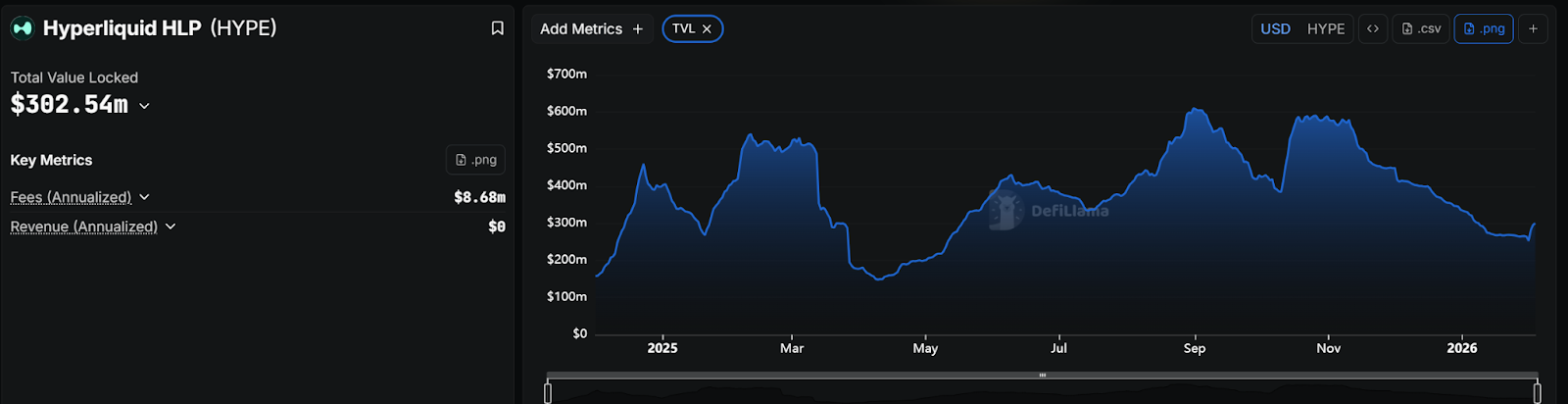
หลังจากการแจก Airdrop ในวันที่ 29 พ.ย. 2024 เราจะเห็นว่า TVL ใน HLP มีการย่อตัวลงเล็กน้อย ซึ่งคาดว่าคือเงินของกลุ่มที่ถอนออกหลังจากการแจก Airdrop
ช่วงต้นปี 2025 TVL ใน HLP พุ่งขึ้นอย่างรวดเร็วไปแตะระดับเกือบ 600 ล้านดอลลาร์ สวนทางกับ User ใหม่ที่ลดลง เมื่อ TVL ใน HLP มีมากขึ้น (Deep Liquidity) ส่งผลโดยตรงต่อ Slippage ที่ต่ำลงมากซึ่งเมื่อสภาพคล่องดีขึ้น อาจมีส่วนดึงดูด Whales และนักเทรดความถี่สูง (HFT) ทำให้ Volume การเทรดรวมพุ่งสูงขึ้นตามที่วิเคราะห์ไปในช่วงก่อนหน้า
จากกราฟยังแสดงให้เห็นว่า TVL ของ HLP ในปี 2025 ทั้งปีมีการสวิงขึ้นลงตามสภาวะตลาด เช่น ช่วงเดือน พ.ค. และ ก.ย.-ต.ค. 2025 หรือช่วงเดือนมีนาคม 2025 ที่มีเหตุการณ์ Attack HLP ผ่านการ Manipulate ราคาเหรียญ JELLYJELLY และถึงแม้ว่า HLP จะมีความผันผวน แต่ยอดรวมมักจะฟื้นตัวกลับมาได้เร็ว
จากภาพที่เห็นจากข้อมูล HLP บอกเราว่ารายได้ที่ส่งให้ HLP มีการเติบโตอย่างยั่งยืน และส่งผลทำให้ Liquidity มีมากขึ้นวนกลับไปเป็น Flywheel ส่งเสริมให้แพลตฟอร์มมีการเทรดมากขึ้นไปด้วยนั่นเอง
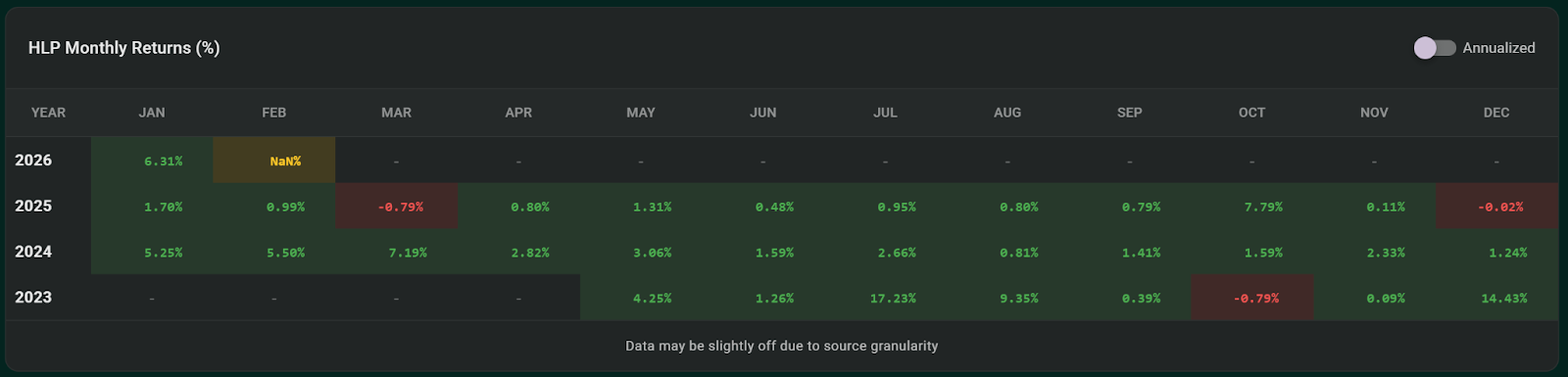
โดยรวม HLP สามารถทำผลตอบแทนเป็นบวกได้อย่างต่อเนื่องในช่วงปี 2024 ที่ตลาดเติบโตสูง แต่เมื่อเข้าสู่ปี 2025 เราจะเริ่มเห็นความผันผวนของผลตอบแทน โดยมีจุดพีคสำคัญในเดือนตุลาคมที่ทำกำไรได้สูงถึง 7.79% สลับกับช่วงที่ผลตอบแทนย่อตัวลง เช่น ในเดือนมีนาคมที่ติดลบ -0.79% จากเหตุการณ์ Manipulate ราคาเหรียญ JELLYJELLY
อย่างไรก็ตาม ภาพรวมในปี 2025 จะพบว่าอัตราผลตอบแทนเฉลี่ยรายเดือนมีแนวโน้มลดลงเมื่อเทียบกับปี 2024 (เช่น ช่วงปลายปี 2025 ที่ผลตอบแทนลงมาอยู่ที่ระดับ 0.03% - 0.11%) ซึ่งส่วนหนึ่งมีสาเหตุมาจากการพึ่งพา HLP ที่ลดลง แทนที่ด้วยการพึ่งพาบทบาทจาก Market Makers มากขึ้นแทน
ปัจจุบันยอด Open Interest รวมของ Hyperliquid กลับมาสูงกว่า 8,000 ล้านดอลลาร์ (ณ วันที่ 28 มกราคม 2026) ถึงแม้ว่าจะมีลดลงไปบ้างในบางช่วง เช่นในช่วงหลังเกิด Black Swan ในวันที่ 10 ตุลาคม 2025 ที่ลดลงไปเหลือราว 7,000 ล้านดอลลาร์ และช่วงเดือนธันวาคม 2025 ที่ลดลงไปเหลือราว 5,000 ล้านดอลลาร์
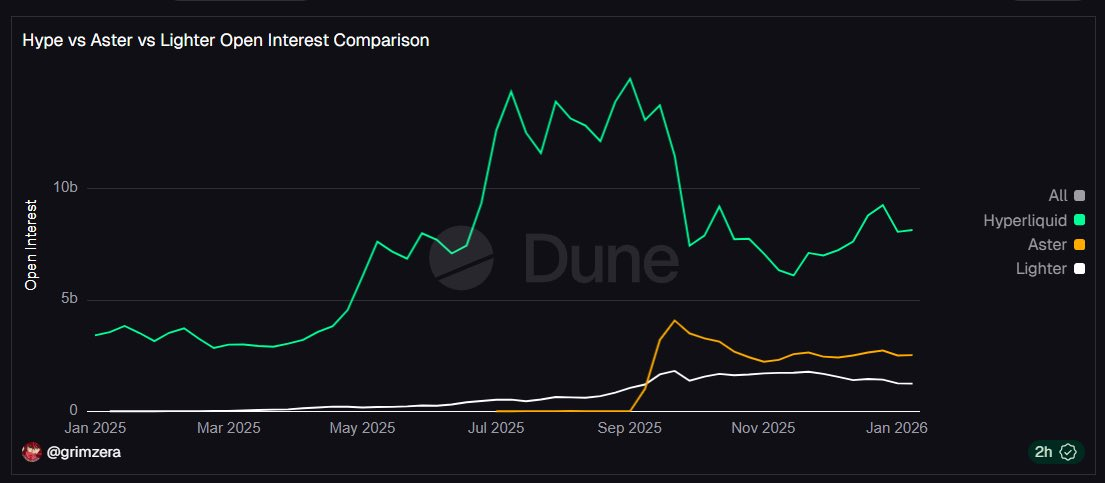
โดยคงความเป็นอันดับหนึ่งในกลุ่ม PerpDEX และทิ้งห่างคู่แข่งหลายเท่าตัว สูงกว่าอันดับสองอย่าง Aster ถึง 3 เท่า
จากตัวเลขทั้งหมดจะเห็นได้ว่า สำหรับในกรณีของ Hyperliquid แม้ว่าจะแจก Airdrop ไปแล้ว แต่ Airdrop ก็เหมือนเป็นเพียงจุดเริ่มต้น แน่นอนว่ามีการเสีย Market Share ไปพอสมควร แต่โดยรวมสามารถรักษาฐาน User แม้ในช่วงที่มี PerpDEX War และสามารถคงอันดับหนึ่งได้ในกลุ่ม PerpDEX ในปัจจุบัน
สำหรับ Hyperliquid ทำให้เราเห็นว่าสิ่งที่สำคัญมากกว่า Incentive คือในเรื่องของ Product ที่ดี รวมถึงการสร้าง Ecosystem ที่แข็งแกร่ง และการไม่ได้เป็นแค่ Application แต่เป็น Layer 1 ของตัวเอง (HyperEVM) หรือการมาของ HIP-3, HIP-4 ทำให้ User มีเหตุผลในการวางเงินไว้ใน Ecosystem ระบบต่อ
นอกจากนี้ อีกสิ่งที่เรามองว่าสำคัญมากที่ทำให้ Hyperliquid แตกต่างจากคู่แข่งรายอื่นอย่างชัดเจนคือการสร้าง Community-First Culture ที่เหนียวแน่น การที่โปรเจกต์เติบโตมาโดยไม่มี VC หนุนหลังตั้งแต่แรก ทำให้ฐานผู้ใช้งานส่วนใหญ่มีความรู้สึกเป็นเจ้าของร่วมกัน
Lighter เป็นโปรเจกต์ที่โดดเด่นด้วยเทคโนโลยี ZK และ Zero-fee Model รวมถึง Backer แข็งแกรง ซึ่งสามารถสร้างกระแส Hype ได้เป็นอย่างดีในช่วงก่อน TGE โดยกรณีของ Lighter สะท้อนถึงความท้าทายของการแจก Airdrop ขนาดใหญ่ในระยะสั้น ข้อมูล On-chain หลังการแจกเหรียญ LIT ในวันที่ 30 ธันวาคม 2025 แสดงภาพที่แตกต่างออกไปดังนี้
เมื่อกางกราฟ Daily Volume & User ของ Lighter ออกมา เราจะเห็นความต่างค่อนข้างมากเมื่อเทียบกับ Hyperliquid
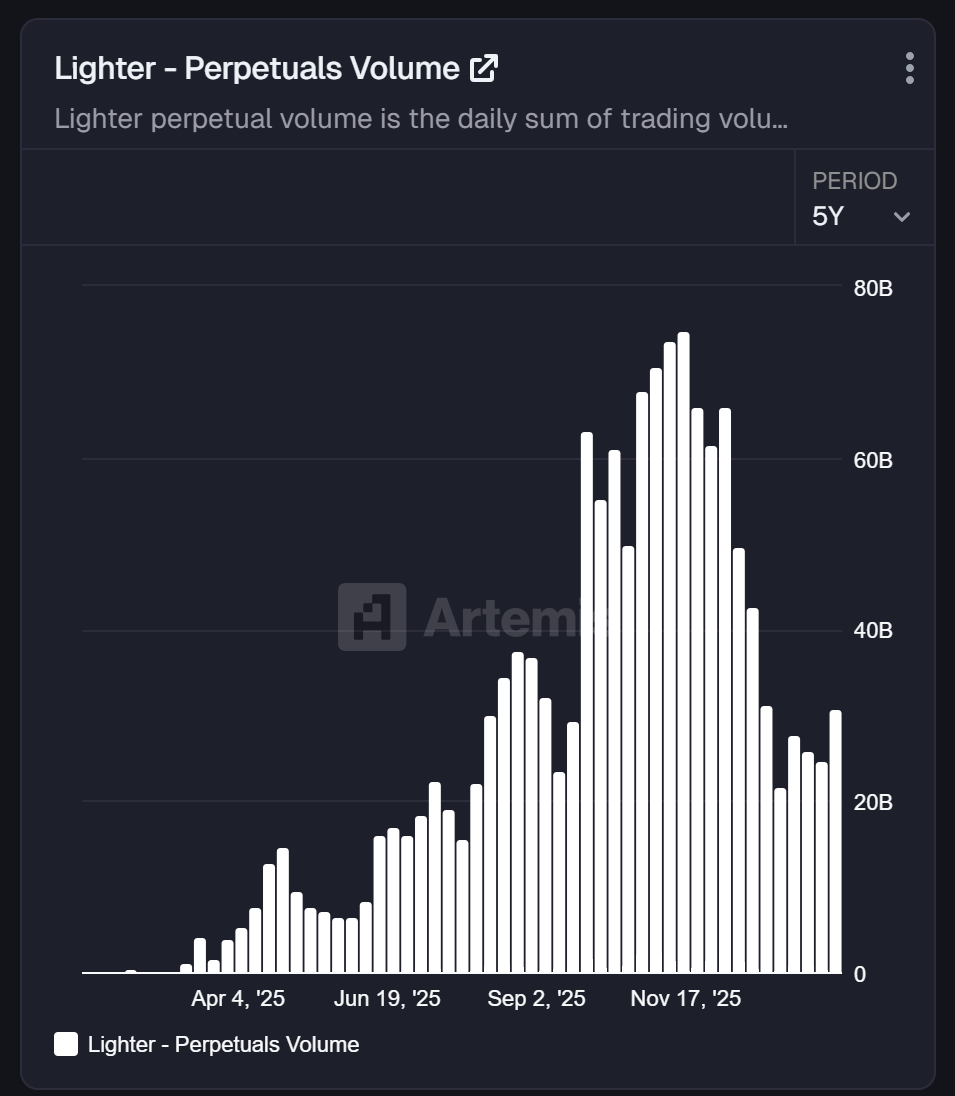
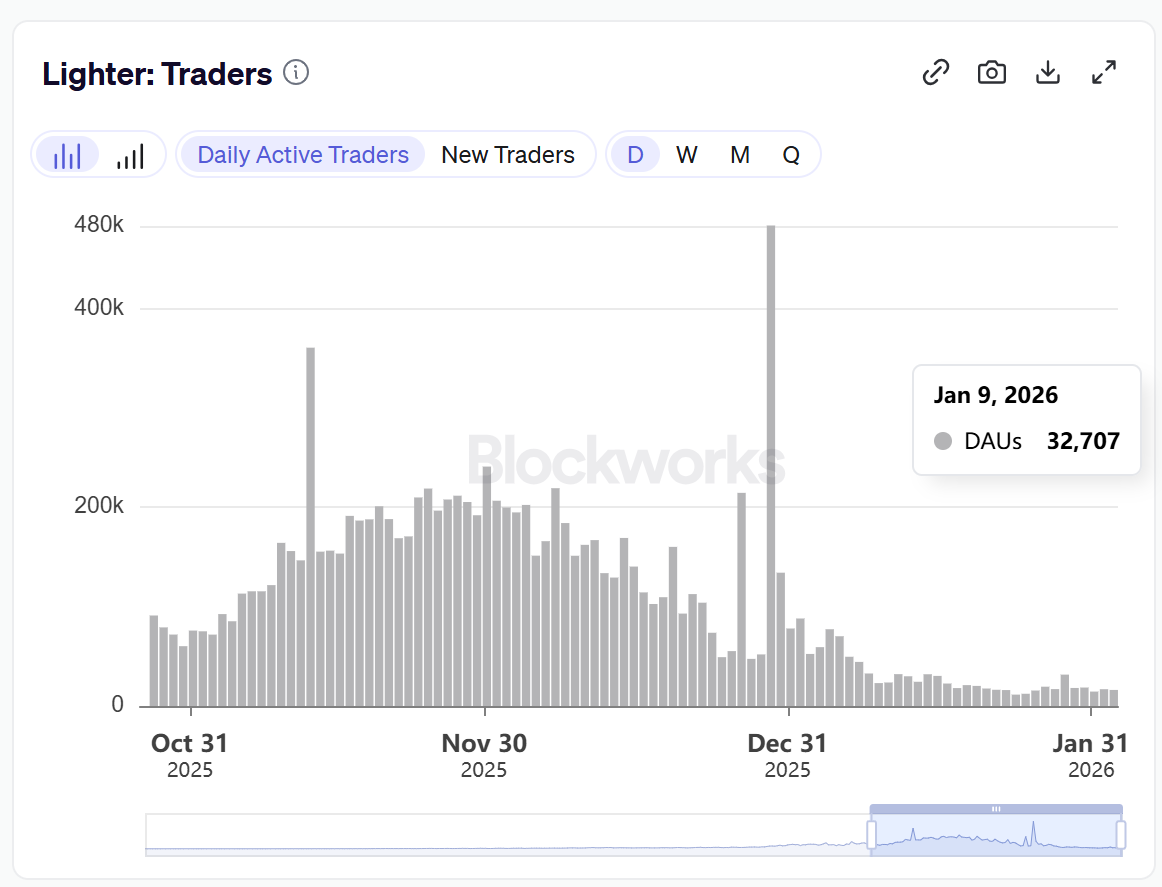
เมื่อดูข้อมูล Onchain ด้าน Volume และ Active Addresses จะเห็นร่องรอยของนักล่า Airdrop ได้ค่อนข้างชัดเจน
ข้อมูล On-chain และสถานการณ์ล่าสุดสะท้อนภาพพฤติกรรมที่น่าสนใจดังนี้
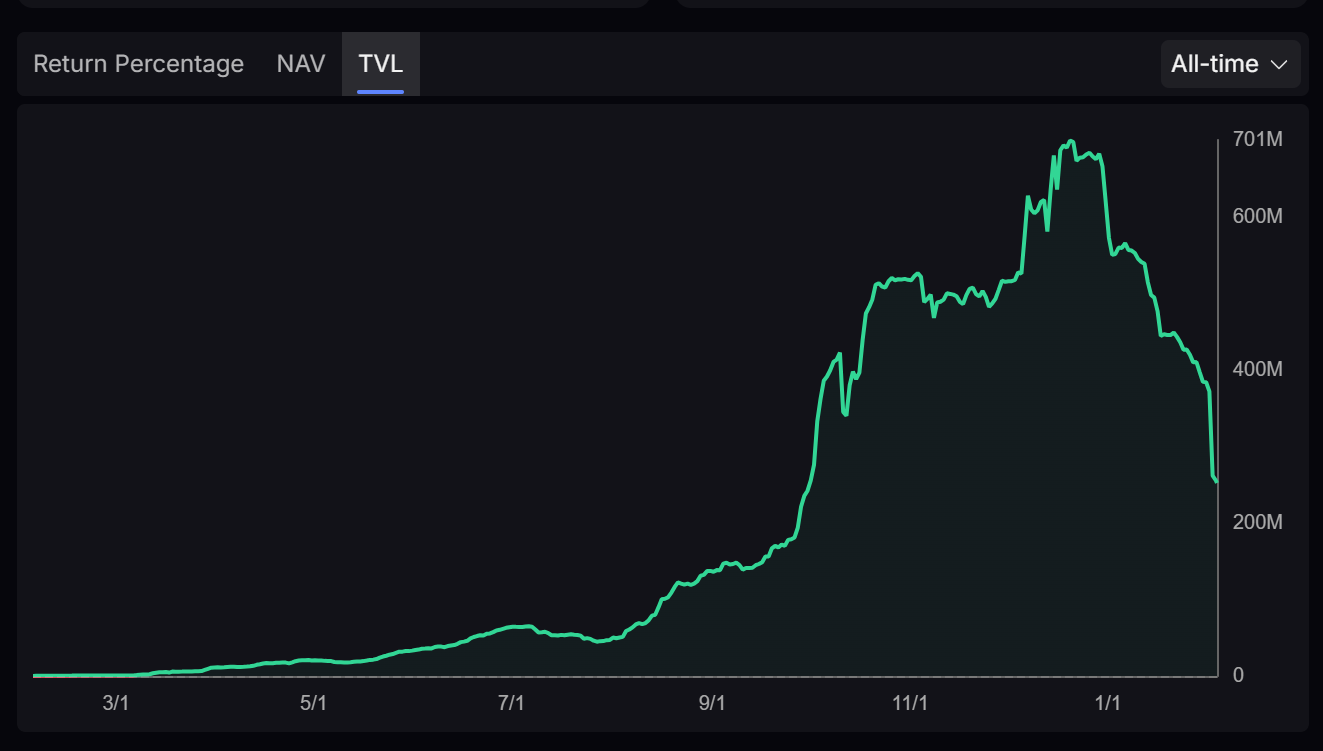
ด้าน TVL (Total Value Locked)
TVL พุ่งสูงขึ้นอย่างรวดเร็ว โดยพีคเคยขึ้นไปแตะระดับราว 700 ล้านดอลลาร์ ในช่วงเดือนพฤศจิกายน 2025 โดยหลังจากนั้นก็มีแนวโน้มลดลงต่อเนื่อง โดยในปัจจุบันอยู่ที่ระดับประมาณ 250 ล้านดอลลาร์ โดยอาจมีสาเหตุมาจากผู้ใช้ส่วนใหญ่เป็นกลุ่ม Mercenary ที่เน้นผลตอบแทนระยะสั้นจาก Airdrop มากกว่า
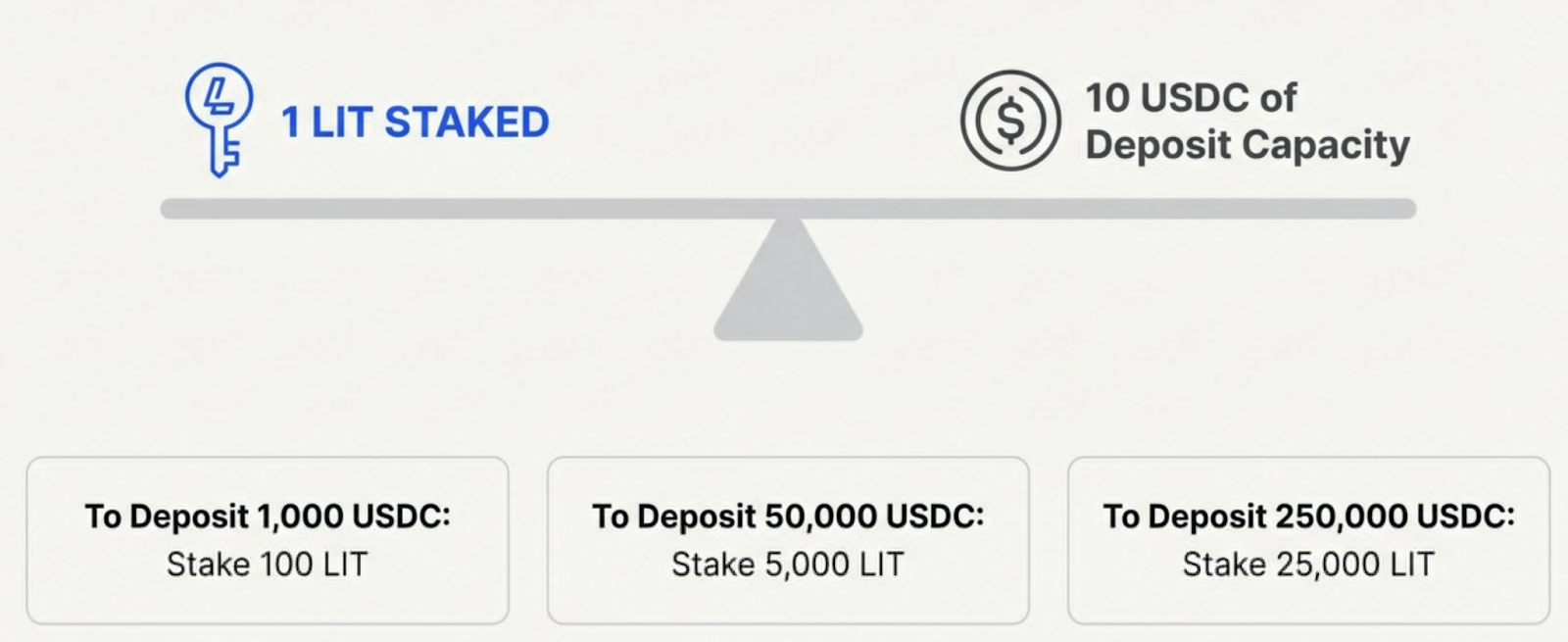
สำหรับสาเหตุที่เป็นไปได้อีกส่วนหนึ่งที่ LLP มี TVL ลดลงอาจเป็นเพราะทาง Lighter ได้เริ่มบังคับให้ผู้ที่จะฝากเงินใน LLP ต้องทำการ Stake เหรียญ LIT ก่อน ในสัดส่วน 1 LIT ต่อ 10 USDC (เช่น ต้อง Stake 1 LIT เพื่อให้มีสิทธิ์ฝาก 10 USDC ใน LLP)
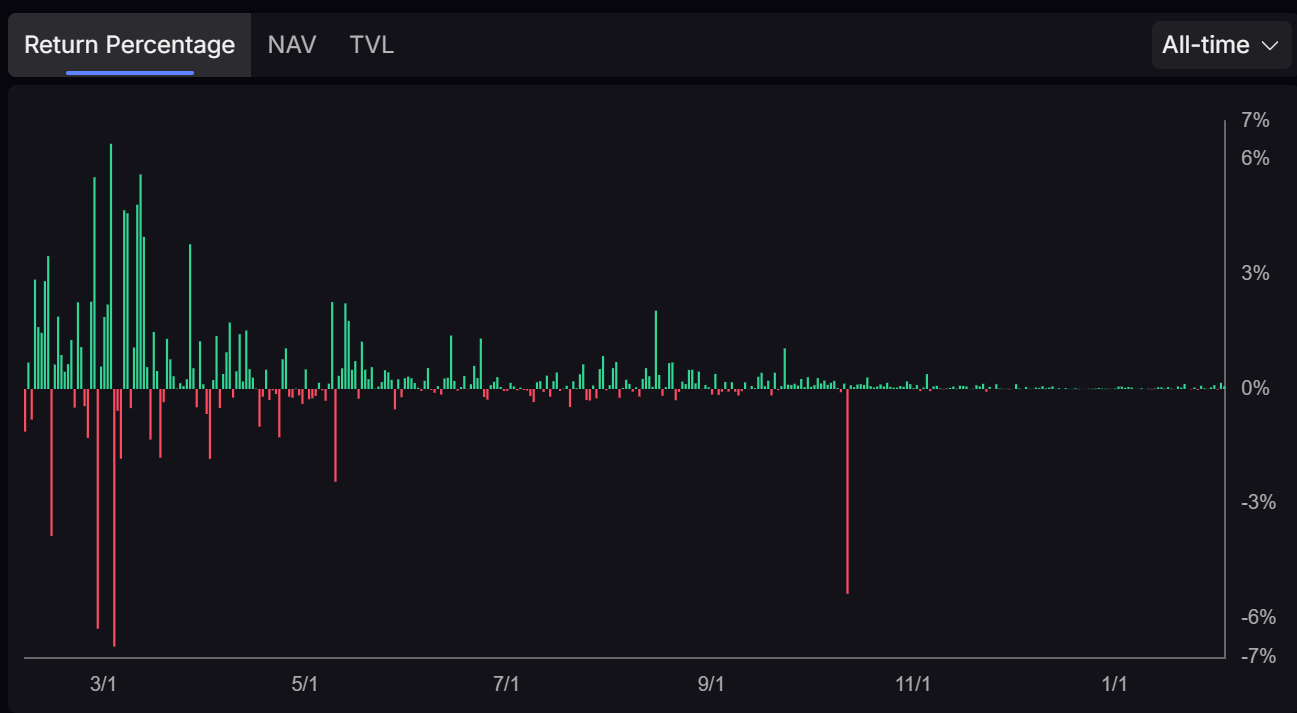
ด้านผลตอบแทน (Return Percentage)
ในช่วงต้นปี 2025 LLP สามารถสร้างอัตราผลตอบแทนได้ดี โดยเฉพาะในช่วงเดือนมีนาคมที่มีความผันผวนสูง (เห็นได้จากแท่งผลตอบแทนทั้งบวกและลบที่รุนแรง) โดยมีหลายวันที่ให้ผลตอบแทนสูงถึง 5% - 8% ต่อวัน
อย่างไรก็ตาม ในช่วงหลังผลตอบแทนรายวันเริ่มลดลง (อยู่ในช่วง 0% - 1%) ตามการลดลงของผู้ใช้งานนั่นเอง
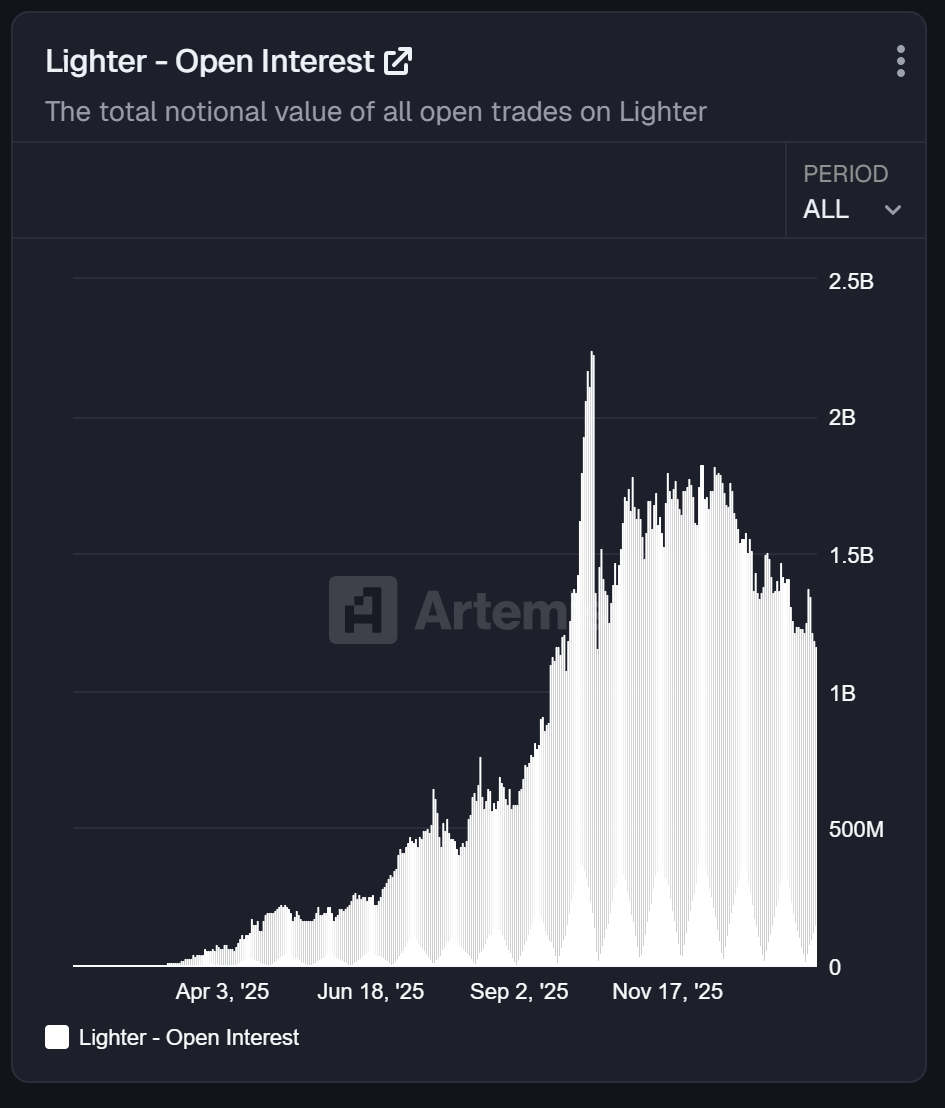
แม้ Volume การเทรดจะดูสูงมากในช่วงก่อนการแจกเหรียญ แต่ถ้าดูจาก Open Interest (OI) ณ ต้นเดือนกุมภาพันธ์ 2026 จะเห็นว่า Lighter มีค่า OI เฉลี่ยอยู่ที่ประมาณ 1,300 ล้านดอลลาร์เท่านั้น เมื่อนำไปเทียบกับ Hyperliquid จะพบว่าห่างกันกว่า 5 เท่า
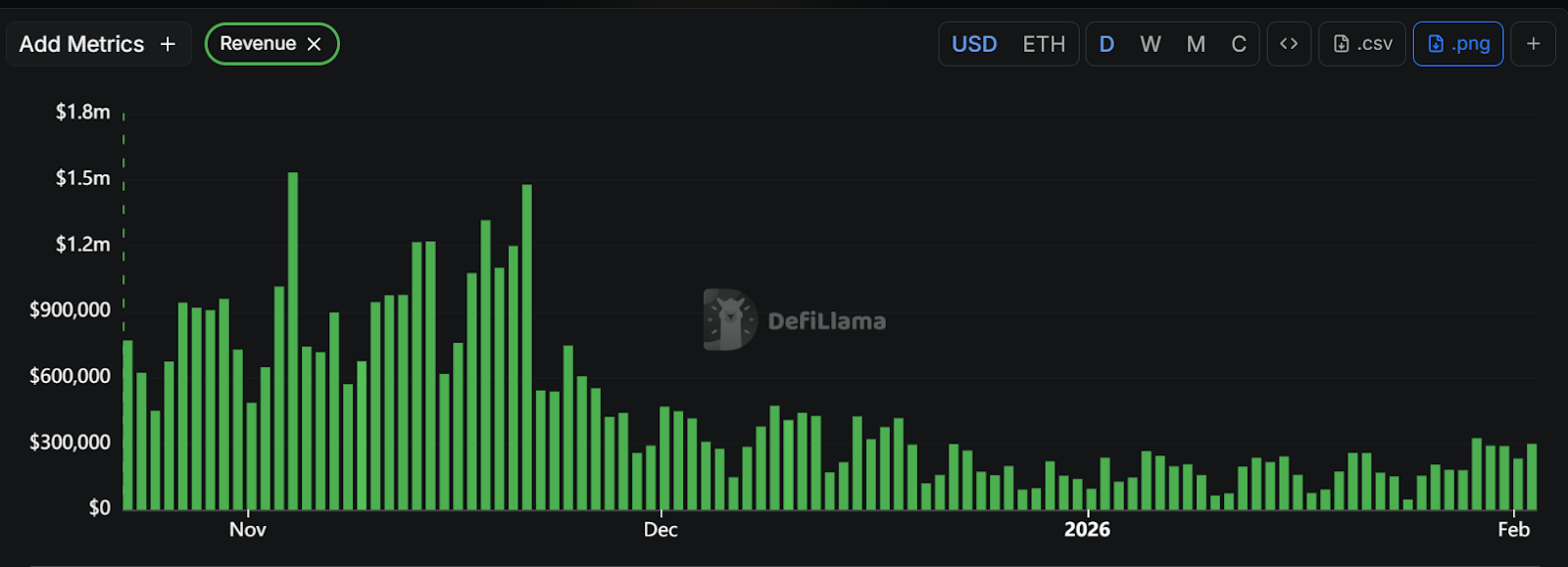
ในด้าน Revenue ของ Lighter จาก DefiLlama และข้อมูล On-chain ล่าสุดพบว่ามีสัญญาณที่น่ากังวลต่อความยั่งยืนของแพลตฟอร์มหลังการแจก Airdrop โดยจากกราฟแท่งสีเขียว จะเห็นว่าในช่วงก่อนการแจก Airdrop (พฤศจิกายน - ธันวาคม 2025) Lighter สามารถสร้างรายได้ต่อวันอยู่ในระดับสูงเฉลี่ยประมาณ 600,000 - 1,500,000 ดอลลาร์ต่อวัน
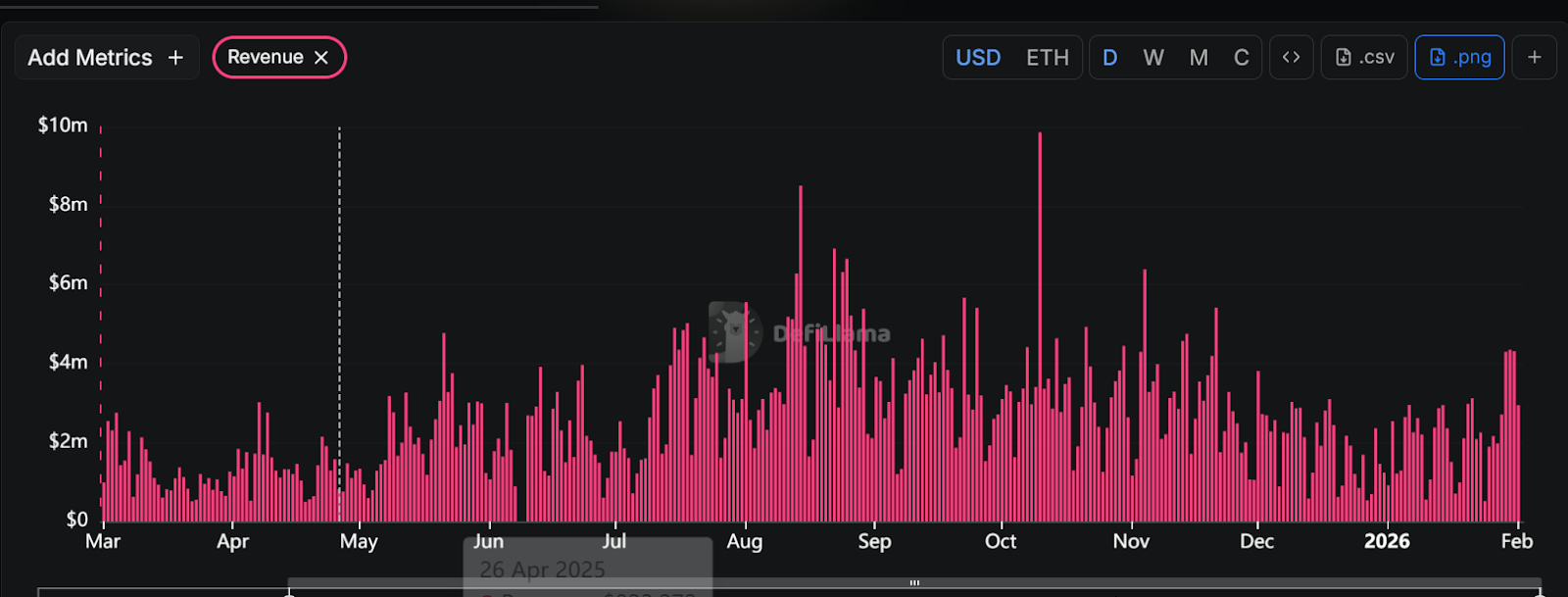
แต่ทันทีที่ผ่านช่วง TGE (30 ธันวาคม 2025) จะเห็น Revenue ลดลงอย่างมีนัยสำคัญ โดยจะเห็นว่า Revenue ร่วงลงเหลือเพียง 290,000 ดอลลาร์ในวันที่ 2 กุมภาพันธ์ 2026 (เทียบกับ Hyperliquid ที่ 2.95 ล้านดอลลาร์ ณ วันที่ 2 กุมภาพันธ์ 2026) ซึ่งถือเป็นการลดลงที่ค่อนข้างมากเมื่อเทียบกับช่วงพีค เมื่อเทียบกับ Hyperliquid ที่สามารถคง Revenue ได้ต่อเนื่องกว่า
สาเหตุหลักอาจมาจาก Revenue ส่วนใหญ่ในช่วงก่อนหน้าเกิดจากการปั่น Volume เพื่อล่าแต้ม (Wash Trading) เมื่อจบซีซั่นการแจก Airdrop อาจทำให้การใช้งานลดลง
จุดขายหลักของ Lighter คือการเป็น Zero-Fee DEX สำหรับรายย่อย ถึงแม้ Lighter จะมี Volume มหาศาลในช่วงปั๊มแต้ม แต่รายได้จริง (Revenue) กลับมาจากเฉพาะกลุ่มผู้ใช้งานระดับสถาบัน Market Maker หรือ API/HFT เท่านั้น
และเมื่อรายได้ลดลงอย่างหนัก ส่งผลกระทบต่อ LIT Buyback ที่เคยประกาศไว้ว่าจะใช้รายได้บางส่วน มาทำการ Buyback เหรียญ LIT แต่เมื่อไม่มี Revenue ลดลง จึงไม่สามารถรักษาระดับราคาเหรียญ LIT ไว้ได้ ทำให้ Sentiment ของ Community และนักลงทุนเสียไปประมาณหนึ่ง
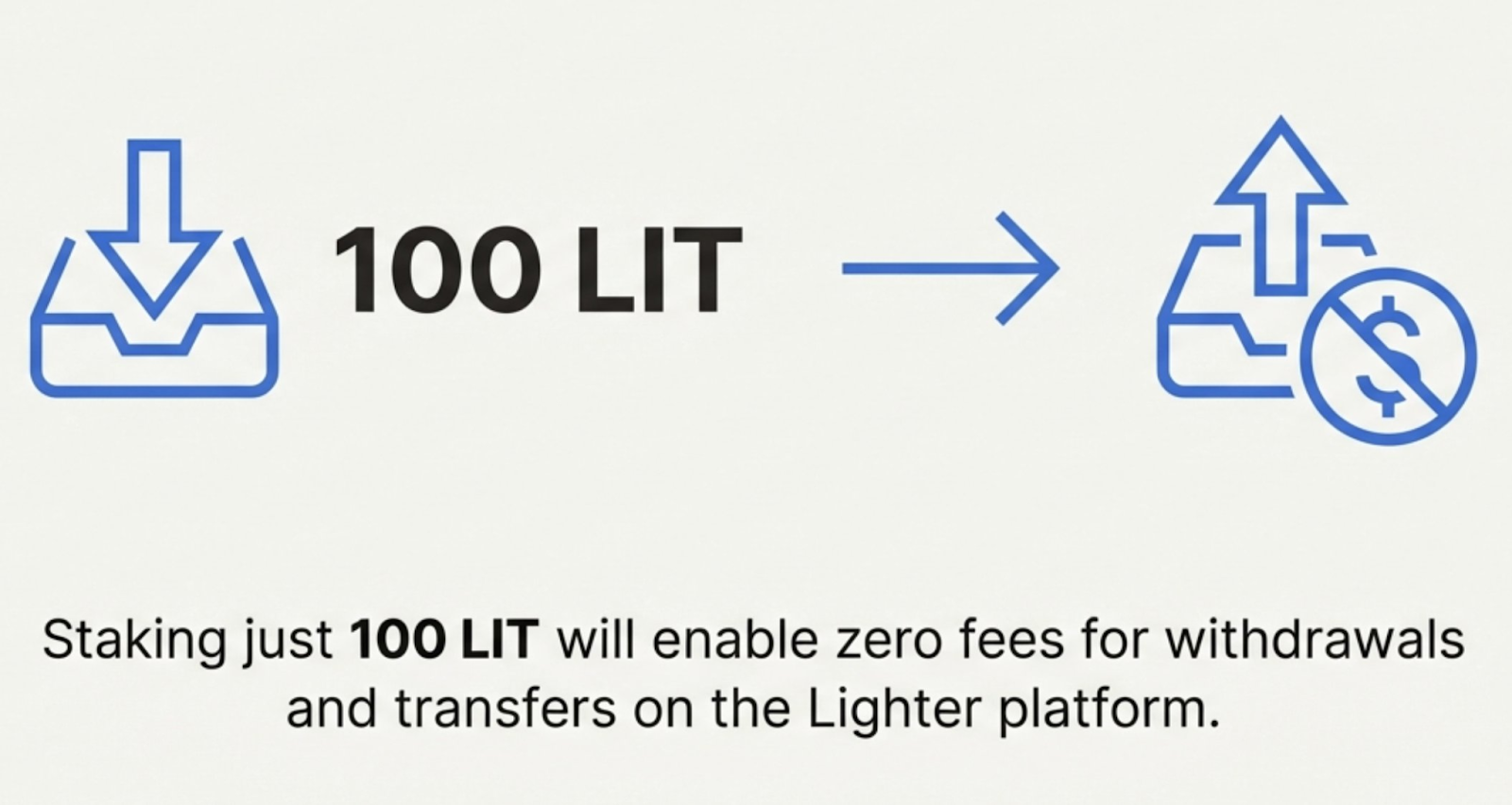
จากเดิมที่ Lighter ใช้กลยุทธ์ Zero-fee สำหรับทั้งการเทรดและการถอน แต่หลังจากที่เจอการลดลงของรายได้ อาจส่งผลให้ทาง Lighter ปรับเปลี่ยนโมเดลใหม่

จากข้อมูลล่าสุดในวันที่ 2 กุมภาพันธ์ 2026 และข้อมูลย้อนหลังในช่วงสัปดาห์ที่ผ่านมา พบว่าสัดส่วนผู้ถือเหรียญลดลงอย่างรวดเร็ว:
จากการวิเคราะห์ข้อมูล On-chain ทั้งหมด เราสามารถสรุปความแตกต่างที่ตัดสินชะตาของโปรเจกต์หลังแจกเหรียญได้ 3 ประเด็นหลัก:
หมายเหตุ: ทั้งนี้การวิเคราะห์ดังกล่าวอาจมีความคลาดเคลื่อนส่วนหนึ่งจากสภาวะตลาดของช่วงการแจก Airdrop ของ Hyperliquid และ Lighter ที่มีความแตกต่างกันพอสมควร โดย Hyperliquid ได้เปรียบจากการเปิดตัวในช่วงปลายปี 2024 ซึ่งเป็นช่วงที่ตลาด PerpDEX กำลังเริ่มเข้าสู่ขาขึ้น และสภาวะตลาดโดยรวมที่ดีกว่า
ดังนั้น ถ้าใครที่กำลังเล็งฟาร์มโปรเจกต์ใหม่ๆอย่าง เช่น EdgeX หรือ Variational เราอาจใช้กลยุทธ์ 3 อย่างในการเลือกโปรเจกต์ที่มีศักยภาพ:
แต่ทั้งนี้ ทั้งหมดเป็นเพียง Criteria ในการเลือกโปรเจกต์ในการฟาร์มเบื้องต้นเท่านั้น สุดท้ายแล้วก็ต้องมาดูว่าทางโปรเจกต์จะมีกลยุทธ์อะไรในการรักษา User และเพิ่ม Demand จริงได้ด้วย
นอกจากนี้ ทั้งนี้ยังไม่ได้หมายความว่า โปรเจกต์ที่ดีจะแจก Airdrop ได้ดีเสมอไป ตัวอย่างเช่น Lighter ก็แจกได้ดีพอสมควร แต่หลัง TGE กลับเผชิญปัญหาการรักษา User ในทางกลับกัน โปรเจกต์ที่มี Fundamentals แข็งแกร่งอาจแจกน้อยกว่า แต่มีโอกาสอยู่ยาวนานกว่า
_______________________________________________________________________________________________________
In our previous article, we explored the intense PerpDEX War of 2025 and analyzed the strengths and weaknesses of various projects. Naturally, many of you are now left with a critical question: once the dust settles from the initial airdrop battles to acquire users, which projects will actually survive as long-term winners? Furthermore, how should we evaluate which PerpDEX project is worth farming next?
In this article, we dive into on-chain data to answer the burning question every airdrop hunter has: what happened to projects like Hyperliquid or Lighter after the initial hype died down? Did users stick around, or did they vanish alongside the tokens being dumped? We will use these insights to help you decide which upcoming projects—such as EdgeX, Variational, or Extended—are truly worth your time and capital.
The year 2025 is considered the year of the Incentive War for PerpDEX, where various projects poured massive budgets into attracting liquidity through Points systems and Airdrops. This caused monthly trading volumes to peak at $1.2 trillion in October 2025, resulting in this sector becoming one of the most successful Narratives for airdrop hunters.
In 2025, Hyperliquid was considered the number one PerpDEX project, once leading with a market share of over 70%. However, Hyperliquid’s market share has currently dropped to approximately 20% due to the influx of numerous competitors.
Moving into 2026, although we believe that PerpDEXs will continue to grow and remain a consistently popular narrative with massive opportunities, we must admit that these opportunities will not be as easy to capture as before. This is due to several factors, including the arrival of new players and the overall crypto market situation, which is currently struggling.
In the next part, we will examine the on-chain data of Hyperliquid and Lighter to see what has happened, based on metrics such as Daily Volume, Open Interest, and TVL.
Hyperliquid serves as a case study that defies all rules of the "Airdrop Dump." On-chain data from the $HYPE token distribution in late 2024 through early 2026 reflects several fascinating behaviors:
Hyperliquid’s Daily Volume and Users chart from Dune Analytics reveals a compelling pattern that contradicts the common belief that users vanish after an airdrop.
Following the airdrop, the number of New Users (green) experienced a sharp decline—typical behavior for "mercenary users" who migrate to farm other projects.
From Q2 2025 onward, a very clear picture emerges: Volume (blue) grew substantially, eventually far surpassing the levels seen during the airdrop phase. Meanwhile, New Users (green) did not spike at the same rate. This indicates that Hyperliquid’s post-airdrop success was driven by a shift from focusing on quantity of users to quality of capital. Volume grew sustainably without needing constant infusions of new users—unlike other projects where activity plummets as soon as incentives end.
Conclusion from On-chain Data: The Daily Volume and User data allows us to conclude that Hyperliquid’s airdrop acted as a catalyst to build a robust user base, enabling the platform to continue growing through its own Product-Market Fit.
On-chain data regarding HLP also reveals the following interesting insights:
Following the Airdrop distribution on November 29, 2024, we can see that the TVL in HLP experienced a slight pullback. This is expected to be capital from the group that withdrew after the airdrop distribution.
In early 2025, TVL in HLP rose rapidly, reaching nearly $600 million, diverging from the declining number of new users. As TVL in HLP increased (Deep Liquidity), it directly resulted in significantly lower slippage. This improved liquidity likely attracted Whales and High-Frequency Traders (HFT), causing total trading volume to surge as analyzed in the previous section.
The chart also shows that HLP's TVL throughout 2025 fluctuated according to market conditions, such as during May and Sept-Oct 2025, or during March 2025 when there was an attack on HLP through the price manipulation of the JELLYJELLY token. Despite this volatility, the total balance typically recovered quickly.
From the HLP data, we can see that the revenue sent to HLP has grown sustainably, leading to increased liquidity which feeds back into a Flywheel, further encouraging more trading on the platform.
Overall, HLP was able to consistently generate positive returns during the high-growth market of 2024. However, moving into 2025, we begin to see volatility in returns, with a major peak in October reaching as high as 7.79%, alternating with pullbacks, such as in March where returns were -0.79% due to the JELLYJELLY price manipulation incident.
However, looking at the overall picture for 2025, the average monthly return trended downward compared to 2024 (for example, by late 2025, returns fell to the 0.03% - 0.11% level). This is partly due to a reduced reliance on HLP, which was replaced by an increased role for Market Makers.
Currently, Hyperliquid's total Open Interest has returned to over $8 billion (as of January 28, 2026), despite some periodic decreases. Notable drops occurred after the Black Swan event on October 10, 2025, when it fell to around $7 billion, and during December 2025, when it decreased to approximately $5 billion.
Hyperliquid maintains its number-one position in the PerpDEX category, distancing itself from competitors by several fold and sitting three times higher than its second-place rival, Aster.
From all these figures, it is evident that in the case of Hyperliquid, despite having already distributed the airdrop, the event served as merely a beginning. While they certainly lost a significant amount of market share, overall they managed to maintain their user base even during the height of the PerpDEX War and continue to hold the number-one position in the PerpDEX category today.
Hyperliquid demonstrates that what matters more than incentives is a superior product and the creation of a robust ecosystem. By operating as its own Layer 1 (HyperEVM) rather than just an application, along with the introduction of HIP-3 and HIP-4, users are given concrete reasons to keep their capital within the system.
Furthermore, another factor we consider crucial in clearly distinguishing Hyperliquid from its competitors is its strong Community-First Culture. Because the project grew without VC backing from the start, the majority of the user base feels a genuine sense of shared ownership.
Lighter is a project that stands out with its ZK technology and Zero-fee Model, backed by a strong group of investors, which successfully generated significant hype leading up to its TGE. However, the case of Lighter reflects the challenges of distributing a massive airdrop within a short timeframe. On-chain data following the LIT token distribution on December 30, 2025, presents a different picture as follows:
When laying out Lighter’s Daily Volume & User chart, we see a stark difference compared to Hyperliquid.
When examining on-chain data for Volume and Active Addresses, the footprints of airdrop hunters are quite clear:
The on-chain data and the current situation reflect the following fascinating behavioral patterns:
TVL (Total Value Locked) Analysis
TVL (Total Value Locked) surged rapidly, peaking at approximately $700 million in November 2025. Since then, it has trended steadily downward and currently sits at around $250 million. This decline is likely attributed to the majority of users being "Mercenary" groups who focused on short-term airdrop returns rather than long-term participation.
Another potential reason for the decline in LLP's TVL could be that Lighter has begun requiring users who wish to deposit funds into the LLP to stake LIT tokens first. The required ratio is 1 LIT to 10 USDC (for example, you must stake 1 LIT to be eligible to deposit 10 USDC into the LLP).
Return Percentage
In early 2025, LLP was able to generate strong returns, particularly during the high volatility of March (as evidenced by the sharp positive and negative return bars). During that period, there were several days where returns reached as high as 5% – 8% per day.
However, in the recent period, daily returns have begun to decrease (now ranging between 0% – 1%) in accordance with the decline in the number of users.
Although trading volume appeared extremely high leading up to the token distribution, the Open Interest (OI) as of early February 2026 shows that Lighter has an average OI of only about $1.3 billion. When compared to Hyperliquid, this reveals a gap of more than 5-fold.
In terms of Lighter’s Revenue according to DeFiLlama and recent on-chain data, there are concerning signs regarding the platform's sustainability following the airdrop. Looking at the green bars, it is evident that during the pre-airdrop phase (November – December 2025), Lighter was able to generate high daily revenue, averaging approximately $600,000 – $1,500,000 per day.
However, immediately following the TGE on December 30, 2025, revenue saw a significant decline. By February 2, 2026, daily revenue plummeted to just $290,000. In stark contrast, Hyperliquid recorded revenue of $2.95 million on that same day. This represents a massive drop compared to Lighter's peak, whereas Hyperliquid has demonstrated far more consistent revenue retention.
The primary reason for this disparity is likely that much of Lighter's previous revenue was generated by Wash Trading from users farming points. Once the airdrop season concluded, the incentive disappeared, leading to a sharp drop in overall platform usage.
Lighter’s primary selling point is its identity as a Zero-Fee DEX for retail traders. While this model generated massive trading volume during the points-farming phase, the actual Protocol Revenue was derived exclusively from institutional users, Market Makers, and API/HFT (High-Frequency Trading) participants.
This reliance has proven to be a significant vulnerability. As revenue plummeted following the airdrop, it directly impacted the LIT Buyback program. The protocol had previously announced that a portion of its revenue would be used to buy back LIT tokens from the market; however, with the sharp decline in revenue, the protocol has been unable to sustain the buyback levels needed to support the token's price. This has led to a noticeable decline in community sentiment and investor confidence.
Lighter previously utilized a "Zero-Fee" strategy for both trading and withdrawals. However, following the decline in revenue, Lighter has pivoted to a new model:
Based on the latest data from February 2, 2026, and historical figures from the past week, there has been a rapid decline in the proportion of token holders:
Based on comprehensive on-chain analysis and the current market landscape as of February 4, 2026, we can identify three core pillars that determine a protocol's survival following its token generation event:
Author’s Note: It is important to note that this analysis accounts for the differing market conditions during each project's launch. Hyperliquid benefited from launching its incentive programs during the late 2024 period when the PerpDEX sector was entering a major macro bull cycle, providing a stronger tailwind for user retention compared to the more saturated market of late 2025.
Therefore, if you are looking to farm new projects such as EdgeX or Variational, we can utilize three strategies to identify high-potential candidates:
1. Analyze Open Interest (OI) over Daily Volume: Volume can be easily manipulated (wash traded), but Open Interest (OI) is a true indicator of how much capital is actually committed and how many real positions are being held.
2. Revenue Generation: If a project generates real revenue from trading fees, liquidations, or borrowing interest, it serves as a strong signal of long-term sustainability. Based on revenue analysis, we can draw preliminary conclusions for other PerpDEX projects as follows:
3. Look for Projects with Their Own Ecosystem: The lesson from Hyperliquid teaches us that being more than just a dApp—such as being a Layer 1 or having its own Native Infrastructure—helps incentivize users to continue staking their tokens for actual utility rather than simply dumping them.
Note: These are only preliminary criteria for selecting projects to farm. Ultimately, we must monitor the specific strategies each project employs to retain users and drive genuine demand in the long run.
Moreover, it's important to note that quality projects don't always correlate with generous airdrop allocations. Take Lighter as an example—despite distributing a sizable airdrop, it struggled with user retention after TGE. On the flip side, fundamentally strong projects might offer smaller allocations but demonstrate greater staying power over time.


.png)

.jpg)
.jpg)


