Alphabet Class A / Tesla xStock / Circle Internet Group: หุ้น Big Tech ที่ถูก Tokenize มูลค่า $40–50 ล้านต่อตัว ผ่านแพลตฟอร์ม Ondo Global Markets และ xStocks
JPMorgan indicates that the CLARITY Act could be a catalyst driving the crypto market in the second half of 2026, provided the legislation passes mid-year. Its passage would benefit various projects by providing a clear regulatory framework and unlocking RWA (Real World Asset) Tokenization at a scale never before seen in history.
If RWA Tokenization can be pushed to that level, it means real-world assets can flow directly into DeFi protocols—whether they are Treasuries, Real Estate, or Commodities. Simply put, what TradFi (Traditional Finance) has been doing for decades is moving on-chain.
Consequently, the RWA & Tokenization sector may be the most watchable group for 2026, possessing stronger fundamentals than narratives in previous cycles. Today, we will discuss what specifically to keep an eye on.
What is Tokenization
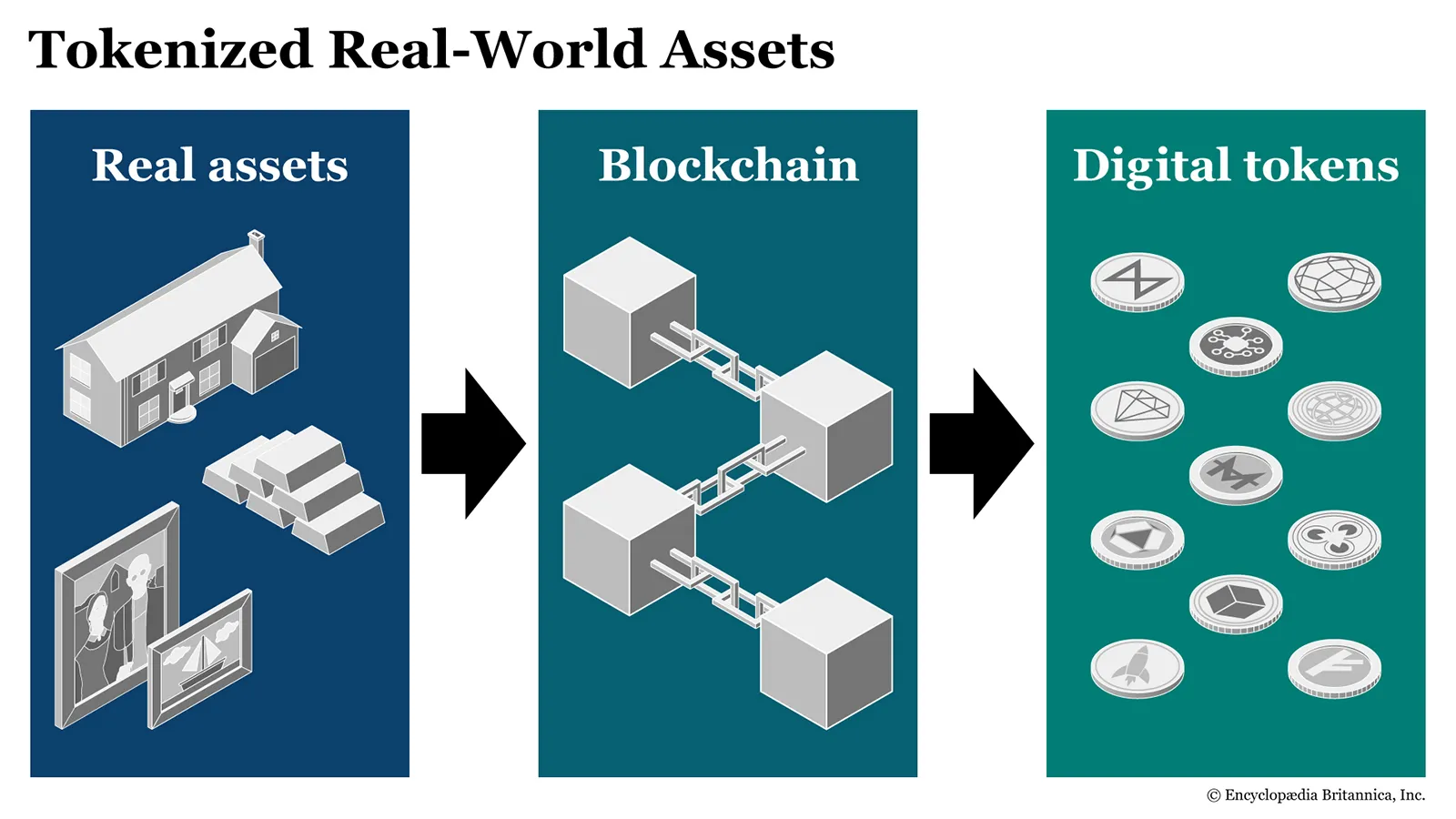
Data from Britannica
To give you some foundational context for those who may not know: Tokenization is the process of converting real-world assets into digital tokens on a blockchain. This includes gold, oil, real estate, government bonds, stocks, or even fine art. Instead of needing to hold the physical asset, we can hold a token whose value is backed by that specific asset.
What makes this fascinating is its ability to solve several legacy financial problems simultaneously:
Liquidity: Assets that are typically difficult to trade, such as real estate or private equity, can be fractionalized and traded 24/7.
Accessibility: Retail investors can own a fraction of an ounce of gold or a portion of a commercial office building without needing to fund the entire purchase.
Transparency & Settlement: Everything happens on-chain, which reduces counterparty risk and accelerates settlement times from the traditional T+2 days to nearly real-time.
Why RWA is the Sector to Watch
As mentioned at the beginning of this article, the RWA group is poised to be one of the biggest beneficiaries of the passage of the CLARITY Act in 2026. Furthermore, this sector has seen significant participation from major financial institutions, proving that adoption is real rather than just a passing trend. This creates an immense opportunity, summarized as follows:
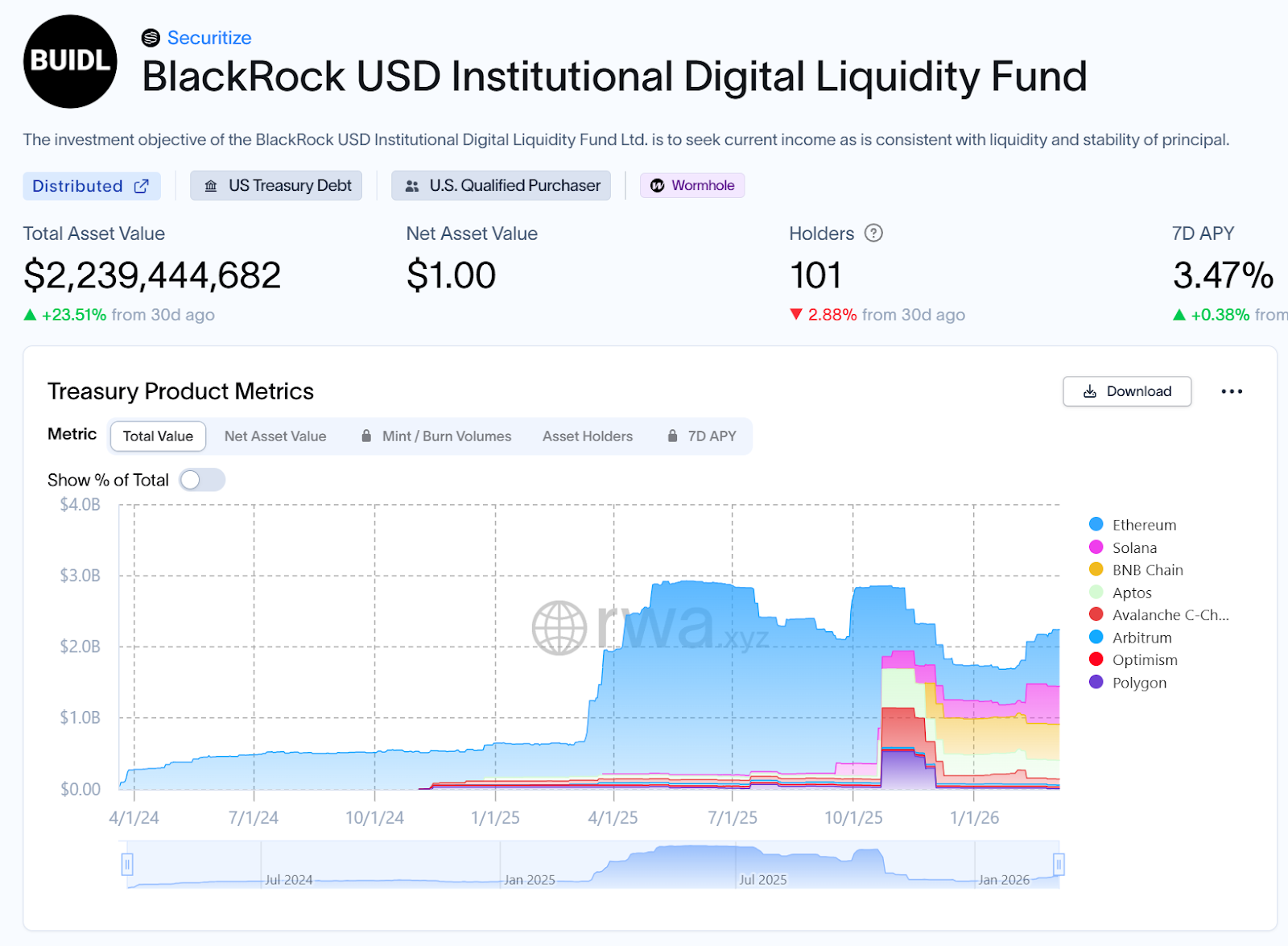
BlackRock: Has launched the BUIDL Fund across various chains. This is a tokenized money market fund that currently holds a value of over $2 billion.
Franklin Templeton: Has introduced FOBXX (Franklin OnChain U.S. Government Money Fund) on multiple blockchains, with its current value exceeding $1 billion.
JPMorgan: Continues to lead with tokenized deposits through its Kinexys platform (formerly Onyx). In 2026, they are expanding these "JPM Coins" to public blockchains like Base and the Canton Network to facilitate near real-time institutional payments.
2. The Massive Scale of the Tokenization Market
The market for tokenizing assets is no longer just a pilot project; it is reaching a massive scale. According to industry reports for 2026:
The global Asset Tokenization market is projected to grow to approximately $2 trillion this year, with a compound annual growth rate (CAGR) of over 37%.
Specific to Real-World Assets (RWA) on-chain, the total value locked (TVL) has already surpassed $24 billion as of early 2026.
Tokenized U.S. Treasuries remain the largest sub-sector, accounting for nearly $9.6 billion of that value, driven by the demand for safe, yield-bearing digital assets.
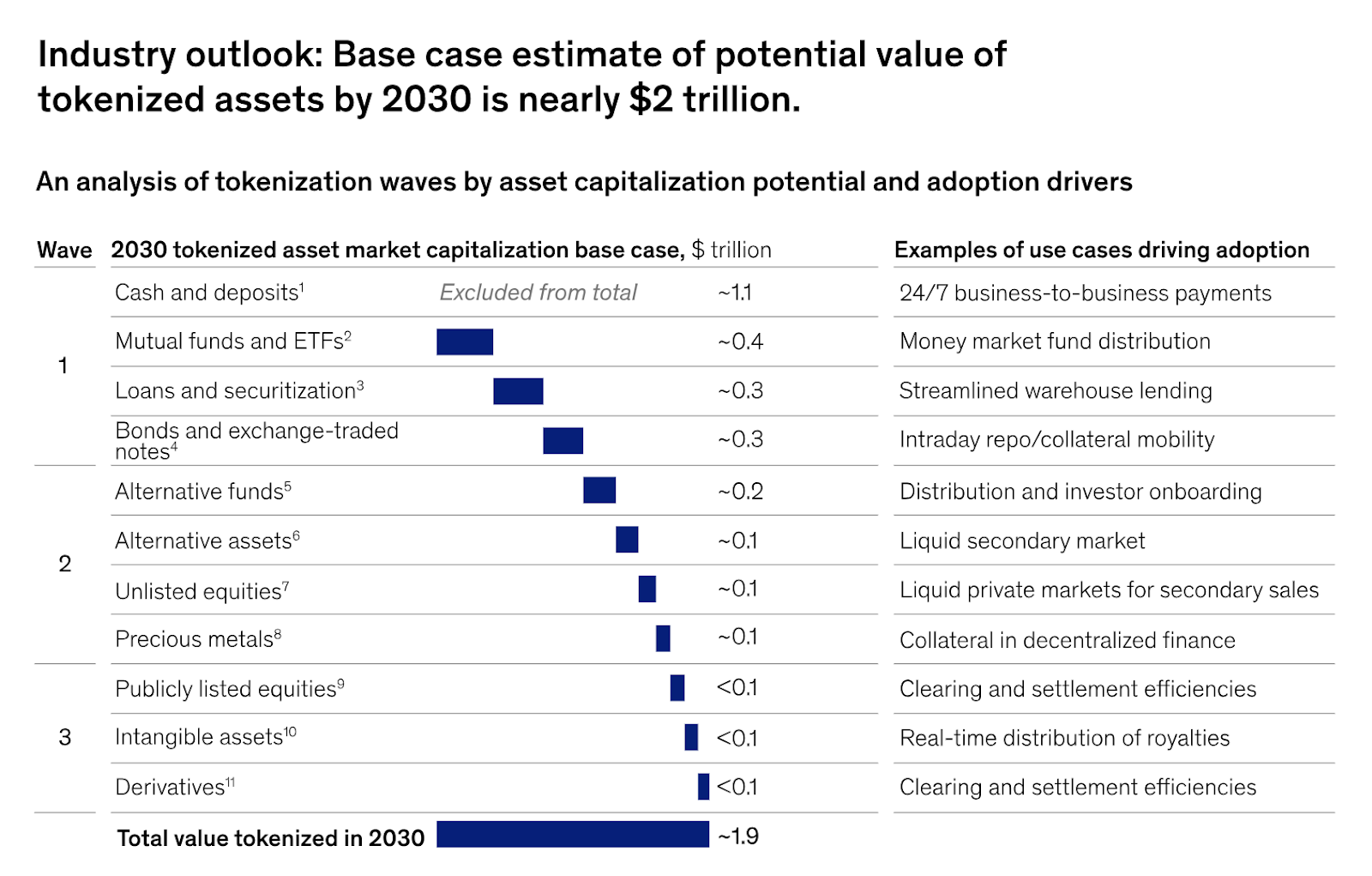
McKinsey
McKinsey estimates that the Tokenized Assets market could reach $2 trillion by 2030, a massive leap from the tens of billions today. This represents a monumental opportunity when looking at the scale of underlying global markets:
Global Gold Market: Valued at approximately $36 trillion.
Oil Derivatives Market: Trading volume exceeds $200 billion per day.
Global Real Estate: Valued at roughly $390 trillion.
Government Bonds: Valued at approximately $75 trillion.
3. A Shift Toward Supportive Regulation
In early March 2026, JPMorgan stated that the CLARITY Act—a pivotal piece of legislation for crypto market structure—has a strong chance of passing through Congress by mid-2026. This could be the primary spark for a major market rally in the second half of this year.
The CLARITY Act is particularly crucial for the RWA sector because it:
Ends Legal Grey Areas: Projects will finally have a clear framework defining what they can and cannot do.
Opens the Door for Institutions: Large-scale institutions that have been waiting for regulatory certainty can now deploy capital with full confidence.
Accelerates RWA Tokenization at Scale: With clear laws, the tokenization of T-Bills, bonds, and commodities will happen at a scale several times larger than before.
Furthermore, the SEC recently approved the first Tokenized Money Market Fund that supports 24/7 trading and instant settlement using USDC. This is a clear signal that regulators are now moving in sync with the industry.
We are on the verge of seeing traditional finance (TradFi) staples—such as Treasuries, Real Estate, and various Commodities—moving on-chain. This will bring deeper liquidity, Real Yield that doesn't rely on token inflation, and DeFi products that are intuitive even for those outside the crypto space.
If the CLARITY Act truly passes this mid-year, the crypto market in the second half of 2026 may look entirely different from what it is today.
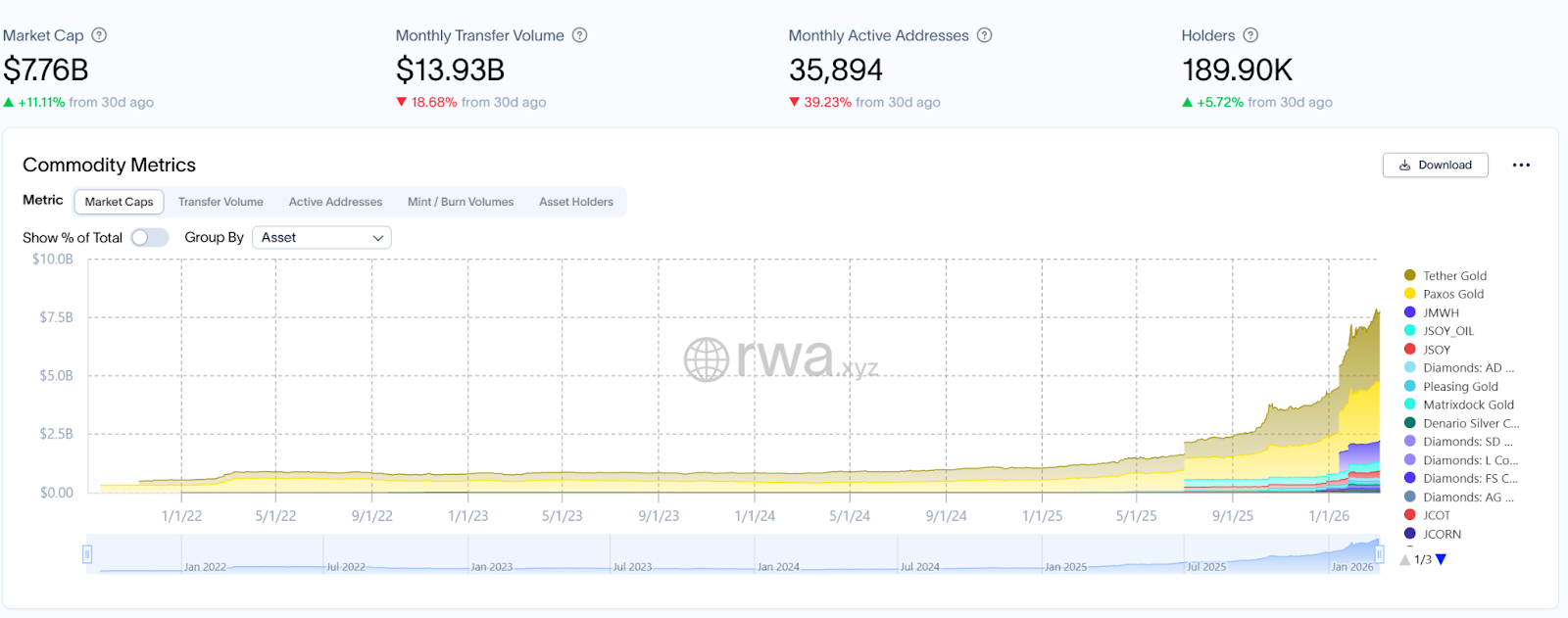
Gold is one of the earliest use cases for tokenization because its value is clear, verifiable, and globally recognized. Currently, there is over $5 billion in tokenized gold value. Examples include:
Paxos Gold (PAXG): Each token represents one fine troy ounce of physical gold stored in Brink's vaults in London. It can be traded on exchanges and used within DeFi protocols.
Tether Gold (XAUt): Issued by Tether and backed by physical gold bullion held in Switzerland.
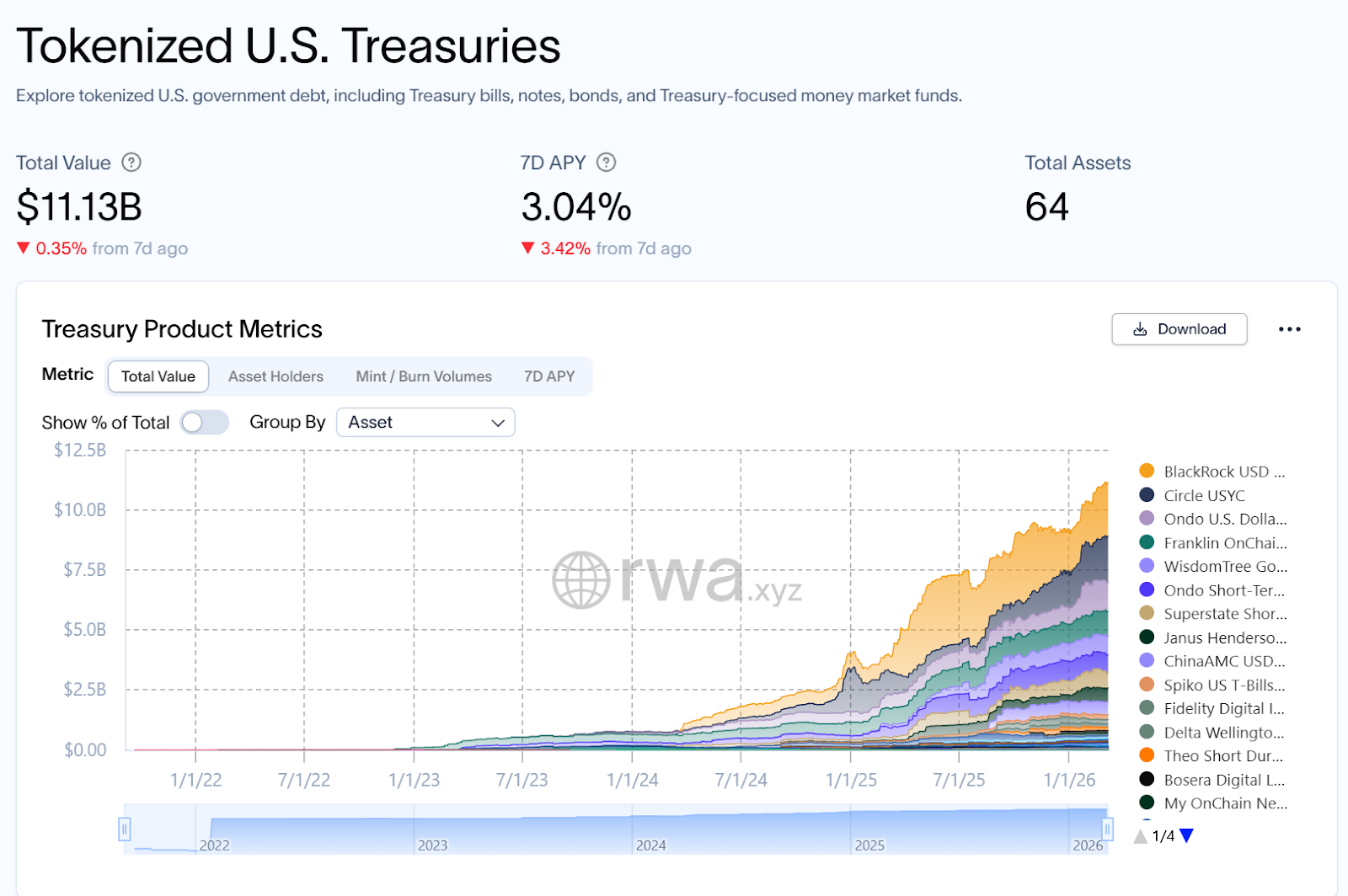
Bonds have become the fastest-growing RWA category over the past two years. In today's high-interest-rate environment, crypto investors seek yield without having to exit the digital ecosystem. Currently, the total on-chain value for this sector exceeds $11 billion. Key projects include:
BlackRock BUIDL (BlackRock USD Institutional Digital Liquidity Fund): The largest tokenized fund in the market, with a value of approximately $2.53 billion. It recently made headlines by integrating with Uniswap to enable institutional-grade liquidity on-chain.
Ondo Finance (ONDO): A leader in the space with its USDY (US Treasury-backed) valued at ~$1.21 billion and OUSG (US Government Bond fund) at ~$770 million, offering annual yields between 2.4% and 3.55%.
WisdomTree WTGXX (Government Money Market Digital Fund): Boasting a value of ~$777 million and a yield of 3.49%. It serves both U.S. retail and institutional clients, marking a major TradFi move into the RWA space.
Franklin Templeton BENJI: Valued at ~$1.03 billion with a 2.52% yield. They recently partnered with Binance to allow Benji tokens to be used as off-exchange collateral.
OpenEden: A T-Bill vault on Ethereum that provides both institutional and retail investors direct access to US Treasury yields.
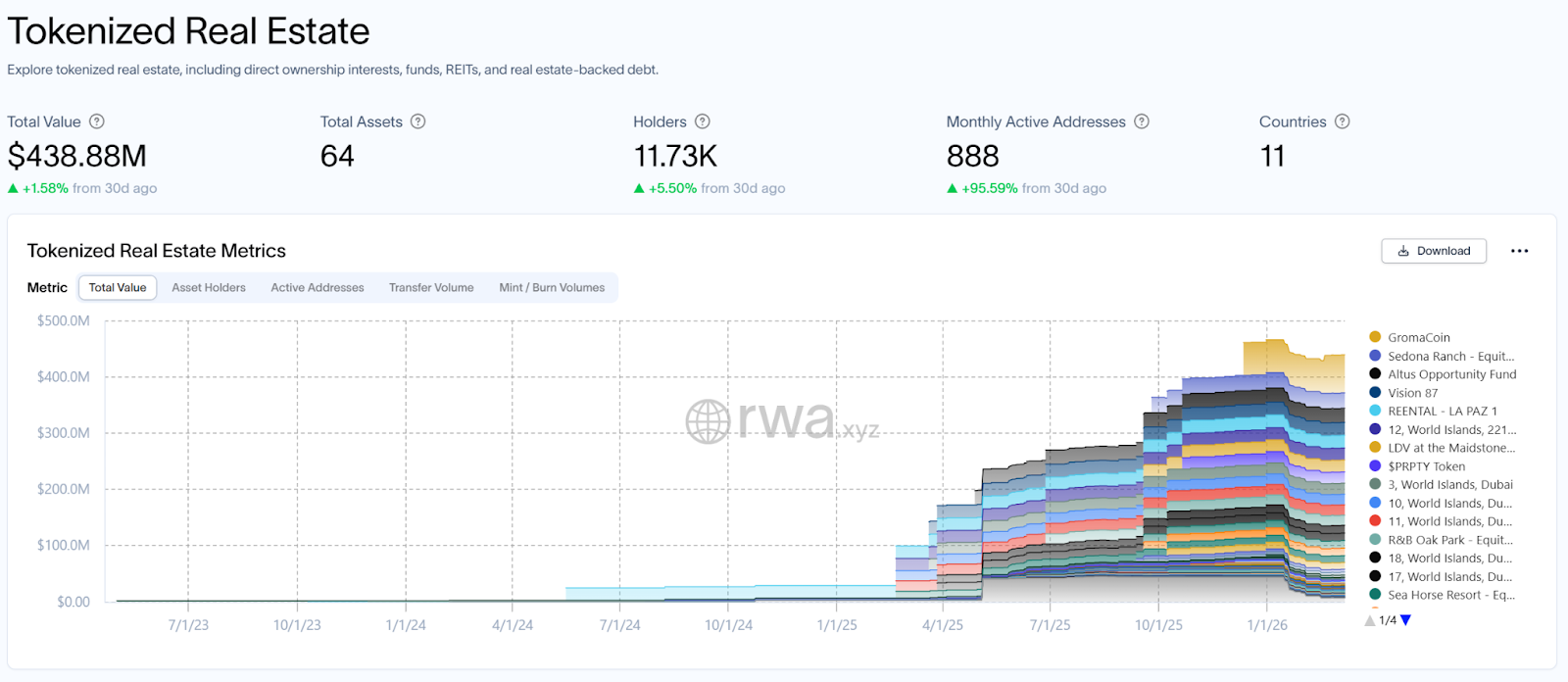
Real estate is considered one of the RWA categories with the greatest potential due to the sheer size of the traditional market (approx. $393 trillion). However, on-chain adoption is still in its early stages. Currently, the total on-chain value for real estate stands at roughly $438.88 million. Key projects leading the way include:
GromaCoin (GRO): The largest project in this space with a value of approximately $67.5 million. Built on Base, it focuses on an office portfolio strategy in Boston, USA.
Sedona Ranch (RSR): A single-asset office property in Odessa, USA, valued at approximately $27.3 million, hosted on the RedSwan Digital platform.
Altus Opportunity Fund (ALTUS): An office portfolio utilizing a development strategy, valued at roughly $25 million on the Hedera network.
Vision 87 (VIZI): An office portfolio located in Laval, Canada, with a value of about $23 million. It is issued on Base by the T-RIZE Group.
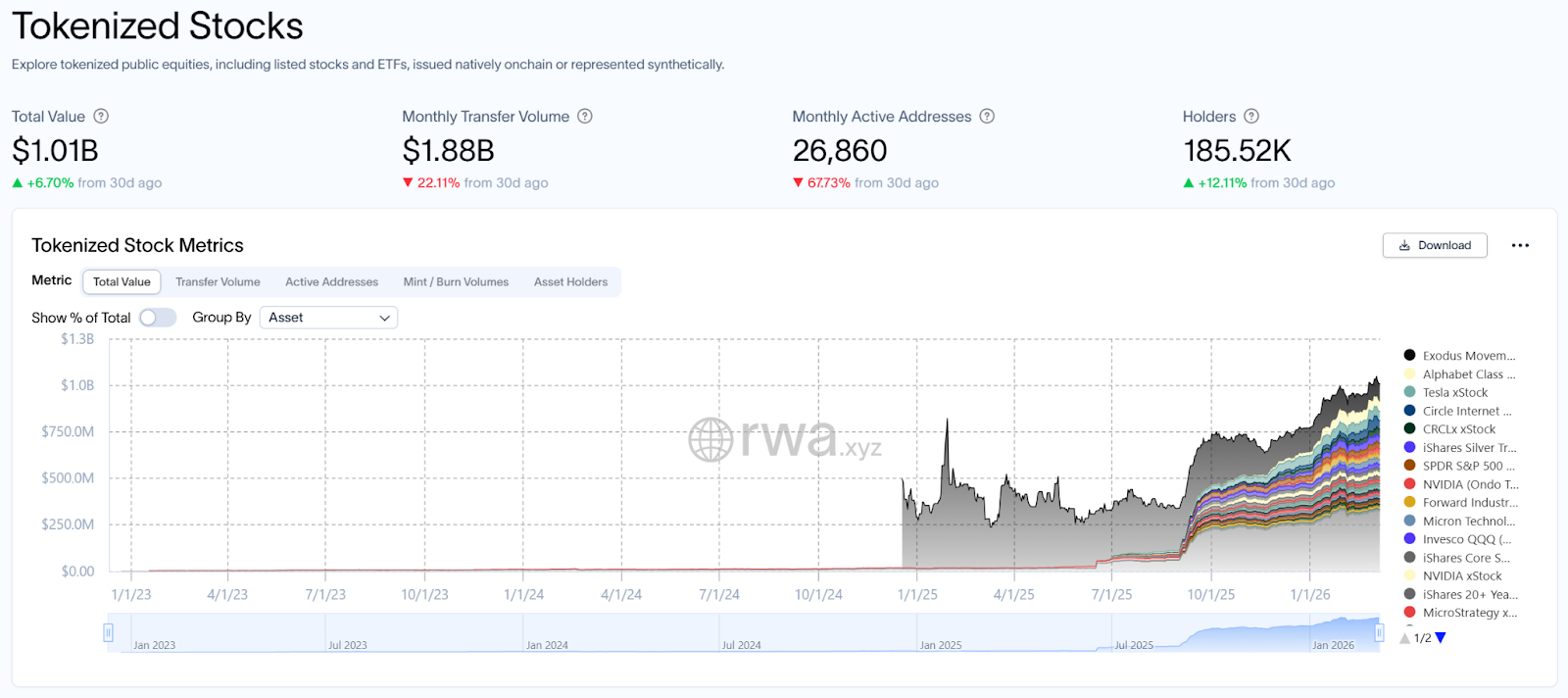
Tokenized public equities, which include both listed stocks and ETFs issued on-chain, currently have a total value of $1.001 billion, with monthly transfer volumes reaching $1.88 billion. Notable projects and assets include:
Ondo Finance: The largest issuer of tokenized stocks with a 54.4% market share. Their Ondo Global Markets (GM) platform provides access to over 165 tokenized stocks.
Robinhood: In Q3 2025, Robinhood launched tokenized stocks on the Arbitrum blockchain. Initially available to EU customers, it provides access to over 200 US stocks. Since its launch, the total value of these tokenized assets has surpassed $16 million.
Exodus Movement (EXOD): The largest individual tokenized stock, valued at approximately $97.9 million, issued on Algorand via the Securitize platform.
Alphabet Class A / Tesla xStock / Circle Internet Group: Major tech stocks that have been tokenized with values ranging from $40–$50 million each via Ondo Global Markets and xStocks.
iShares Silver Trust (SLVon): A tokenized Silver ETF with a value of approximately $35.7 million.
On-chain Perpetual Futures: Leveraged Trading for Stocks, Gold, and Oil
Access to commodities is no longer limited to spot tokens. Decentralized platforms now allow for the trading of Perpetual Futures for assets like XAU (Gold), WTI (Crude Oil), and other commodities directly on-chain, bypassing traditional brokers. Key projects to watch include:
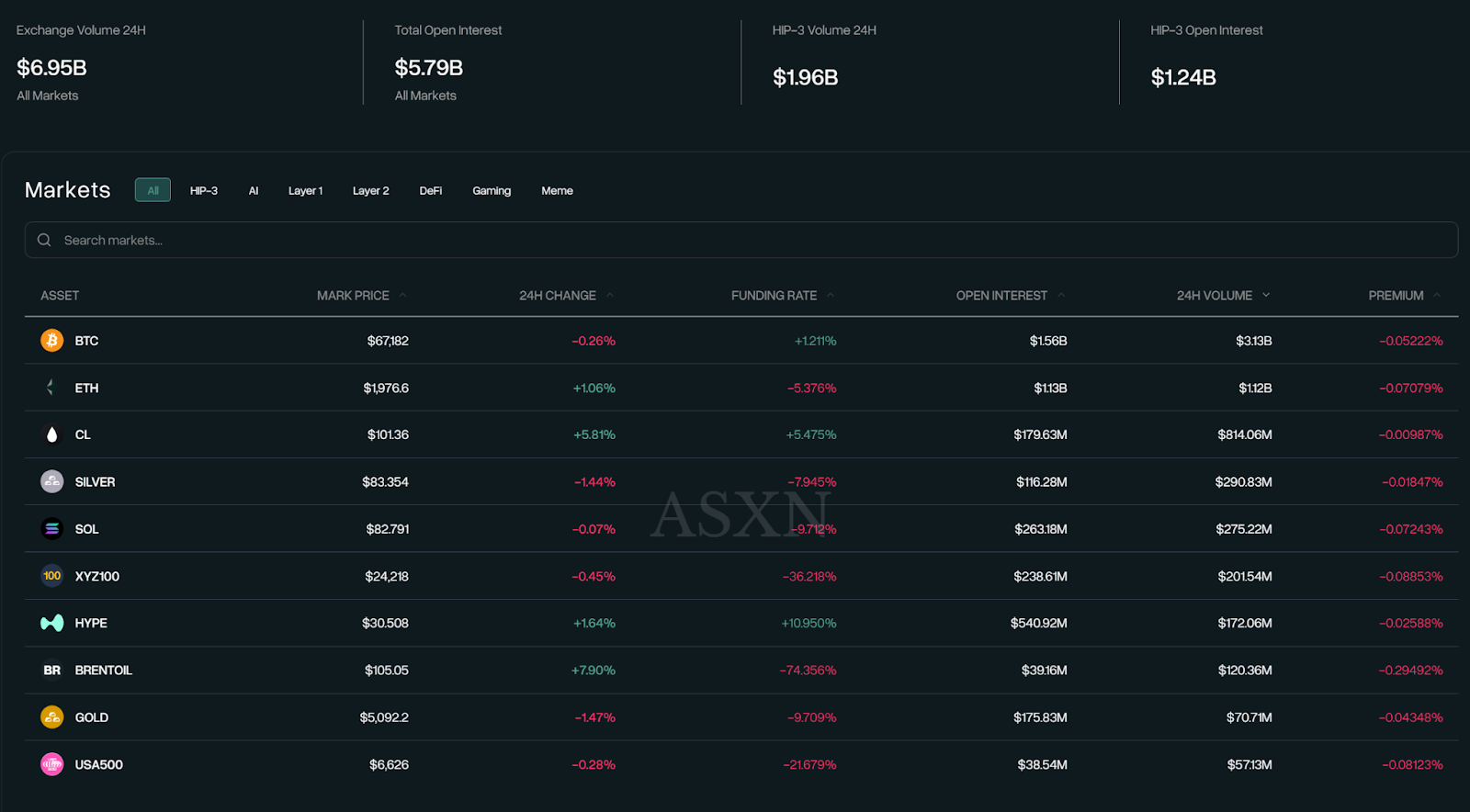
hyperscreener.asxn.xyz/markets/overview (As of March 9, 2026)
Hyperliquid: The daily Perpetual (Perp) trading volume on Hyperliquid, which includes assets under HIP-3, currently averages over $6.9 billion per day. For RWAs, this includes trading for stocks, gold, oil, and more.
In addition to Hyperliquid, there are other platforms supporting RWA trading, such as Ostium, Lighter, Aster, Extended, and EdgeX, with a combined trading volume of approximately $1.5–$2 billion.
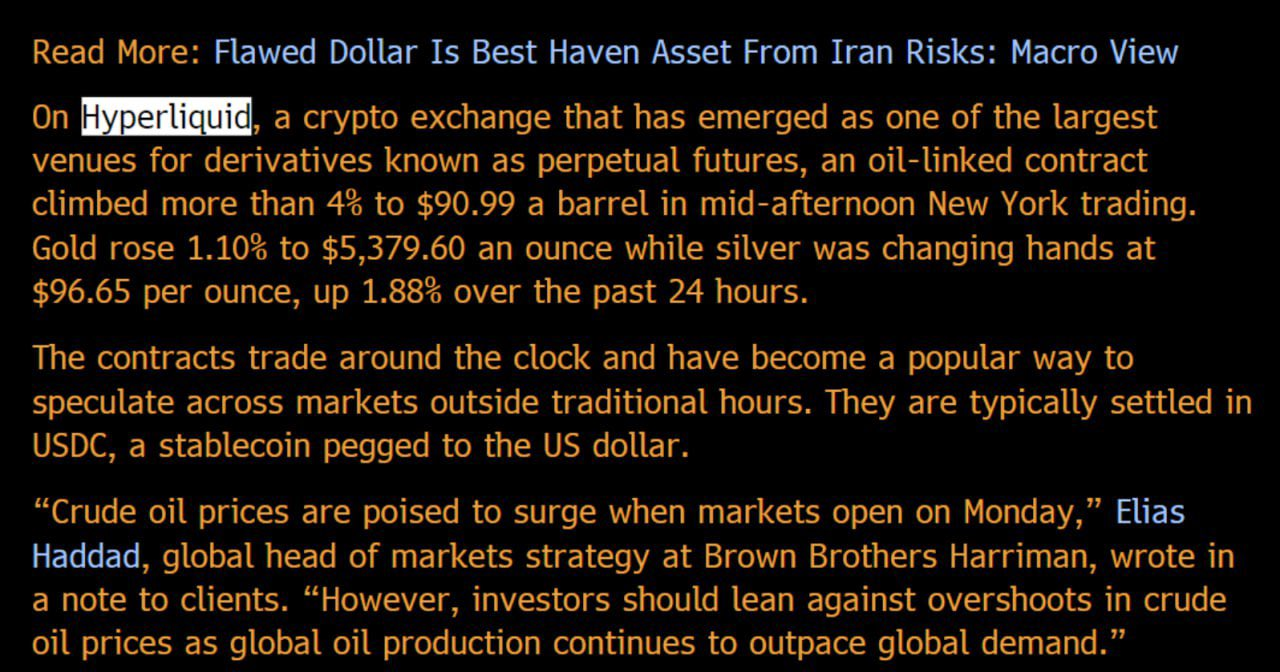
In early March 2026, a significant event occurred when Iran launched an attack while global markets were closed on a Sunday. Bloomberg used Hyperliquid as the reference price for oil because it was the only venue still open. This highlighted the growing acceptance of on-chain futures markets, which offer the distinct advantage of 24/7 trading to major institutions.
Risks to Consider
Counterparty Risk: You must trust the custodian holding the physical assets. If a vault is compromised or the company goes bankrupt, the tokens could become worthless.
Regulatory Risk: Security token laws still vary significantly from country to country.
Liquidity Risk: Secondary markets for some RWA tokens remain thin; while they are easy to buy, they may be difficult to sell.
Oracle Dependency: Feeding real-world asset prices on-chain relies on oracles like Chainlink. This represents a point of failure if the feed is manipulated.
Conclusion: H2 2026 Could Be the Turning Point
The tokenization of Real-World Assets is not just a passing trend; it is the convergence of traditional finance with blockchain infrastructure. Driven by backing from financial giants, emerging regulatory clarity, and genuine demand for yield and accessibility, we are approaching a potential Mass Adoption Moment that the industry has anticipated for years.


.jpg)



.png)

.jpg)
.jpg)


