


.jpg)
Infrastructure
February 16, 2026

LayerZero เปิดตัว 'Zero': บล็อกเชนความเร็วสูง 2 ล้าน TPS พร้อม Backer ยักษ์ใหญ่
เมื่อสัปดาห์ที่ผ่านมา LayerZero ได้ประกาศข่าวสำคัญที่ทำให้หลายคนให้ความสนใจอย่างมาก ด้วยการเปิดตัว "Zero" ซึ่งเป็นโปรเจกต์ Layer 1 Blockchain ของตัวเองที่มาพร้อมกับแนวคิด Multi-core World Computer ด้วยความเร็ว 2M TPS ซึ่งเร็วกว่า Ethereum 100,000 เท่า และเร็วกว่า Solana 500 เท่า
ไปดูกันว่าเทคโนโลยีหลังบ้านของ Zero เป็นยังไง และมีความน่าสนใจยังไงบ้าง
Zero Tech TLDR:
จากบทวิเคราะห์ของ Zero บอกว่า Blockchain ในปัจจุบันอย่าง Ethereum หรือ Solana มีข้อเสียคือการมีสถาปัตยกรรมแบบ Homogeneous คือทุก Validator ต้อง Download และ Execute ทุก Transaction ซ้ำกันหมด ผลที่ตามมาคือไม่สามารถ Scale ได้โดยไม่เสียหลักการ Decentralization ไป
Ethereum เลือกรักษา Decentralization ด้วยการจำกัด Hardware Requirements แต่ก็ทำให้ช้าและค่า Gas แพง ในขณะที่ Solana เลือกเพิ่ม Hardware Requirements สูงมากเพื่อ Performance แต่ก็เสียความ Decentralization ไป
LayerZero วิจารณ์อย่างหนักว่า Ethereum ได้โกหกทั้งโลกด้วยการผลัก Layer 2-centric Roadmap โดยอ้างว่า L2s จะใช้ความ Security และ Decentralization ของ L1 ได้ แต่ในความเป็นจริงมันเป็นไปไม่ได้ เพราะถ้า L2 ถูกทำให้ Decentralized มันก็ไม่สามารถพัฒนาต่อได้ ในทางกลับกันถ้า Layer 2 สามารถ Upgrade ได้ ก็จะหมายความว่ายังมีความ Centralized อยู่นั่นเอง
ซึ่ง LayerZero มองว่าการกระทำของ Ethereum ในการเลือกผลักดัน Layer 2-centric Roadmap ในปี 2020 เป็นการละทิ้งหลักการเดิม (Decentralization) ของตัวเองเพื่อความอยู่รอด และผลักผู้ใช้ออกไปยัง Layer 2 ที่เป็น Centralized chains แล้วบอกผู้ใช้งานว่าเป็นการ Scaling
สิ่งนี้เป็นจุดเริ่มต้นให้ LayerZero สร้าง “Zero” ขึ้นมา
เพื่อแก้ปัญหาที่ว่ามา Zero ได้พัฒนาแนวทางใหม่ที่ผสมผสานทั้งเทคโนโลยีแบบ Zero-Knowledge และการปรับโครงสร้างพื้นฐานของระบบให้ทำงานได้อย่างมีประสิทธิภาพมากขึ้น โดยมุ่งเน้นไปที่การลดภาระงานที่ซ้ำซ้อน พร้อมกับรักษาความ Decentralized ไว้ได้ ซึ่งสามารถสรุปหลักการทำงานหลักได้ 4 ประการดังนี้
1. ZK Proofs: ใช้ Zero-Knowledge proofs ในการแก้ปัญหา Bottleneck ที่จะแก้ปัญหาที่ Validators ต้องพิสูจน์ในทุก Transaction ซ้ำๆกัน หรือ Download Data ในทุกๆบล็อค ให้สามารถทำ Proof แบบเล็กๆแทนได้ ช่วยลดงานในด้าน Computation ได้อย่างมาก
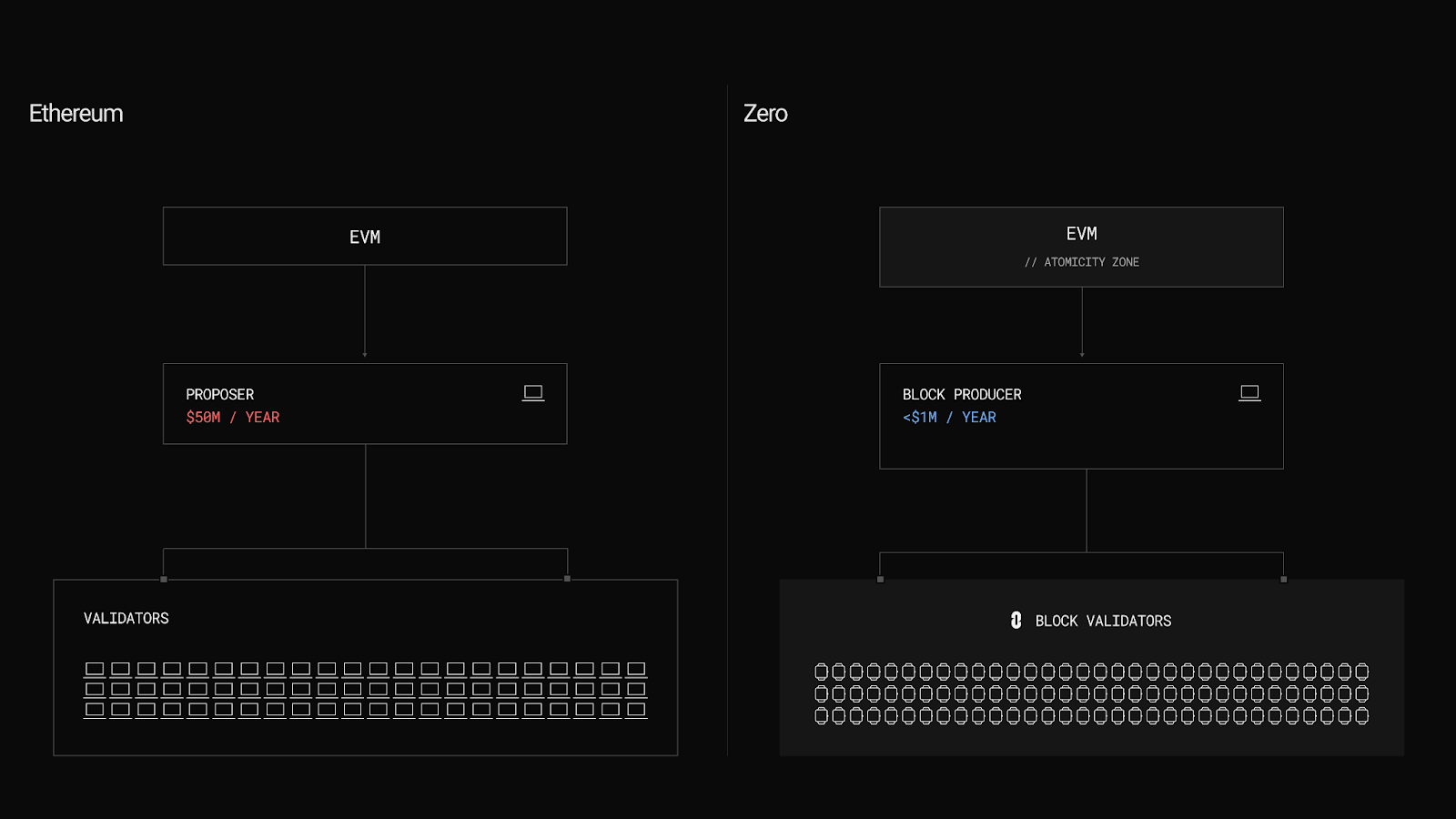
2. Heterogenous Architecture: ZK Proofs อาจยังไม่พอในการแก้ปัญหา Zero จึงเพิ่มโดยการเปลี่ยนจาก Homogeous มาเป็น Hetereogenous Architecture โดยการแยกบทบาทออกเป็นสองกลุ่มคือ Block Producers และ Block Validators (แยก Execution กับ Validation ออกจากกัน) ช่วยลดภาระของ Validator และลดต้นทุนการรันบล็อคเชนที่มีขนาดเทียบเท่ากับ Ethereum จาก $50M เหลือ <$1M/ปี
3. Decentralization: Zero ใช้ระบบ Delegated PoS โดยไม่มี Minimum Stake และ Automatic Slashing และใช้ Senator Model ที่ดึงผู้เชี่ยวชาญเฉพาะทาง (เช่น นักคริปโตกราฟีหรือนักเศรษฐศาสตร์) มาช่วยตัดสินใจในเรื่องทิศทางโปรเจกต์ โดยเราสามารถ Delegate Vote ไปให้ Senator ที่เราต้องการได้
4. Multi-Core World Computer บล็อกเชนปัจจุบันส่วนใหญ่ทำงานแบบ Single-core (ทำได้ทีละอย่างและต้องทำซ้ำๆ เหมือนกันทุกเครื่อง) แต่ Zero สามารถรันได้หลาย Application พร้อมๆกันได้ผ่าน Atomicity Zones ต่างๆ และทำให้ สามารถรองรับธุรกรรมจำนวนมหาศาลได้ คล้ายกับการเปลี่ยนจาก Single-core เป็น Multi-core CPU
เป้าหมายของ Zero คือสร้างบล็อคเชนที่ Decentralized เท่า Ethereum แต่เร็วเท่า Solana โดยการแก้ปัญหา Bottleneck ทั้ง 4 จุดพร้อมกัน:
1. QMDB - แก้ Storage Zero แก้ปัญหาการจัดเก็บข้อมูล (State Storage) ด้วยการเปลี่ยนจากโครงสร้างแบบ Trie-based แบบเดิมมาเป็น QMDB ซึ่งสามารถประมวลผลได้ถึง 3 ล้าน Update/วินาที ซึ่งเร็วกว่า Blockchain State Database ทั่วไปถึง 100 เท่า และเร็วกว่า RocksDB ของ Facebook ถึง 6 เท่า และมีประสิทธิภาพสูงพอที่จะรองรับ Application ระดับโลกอย่างตลาดหุ้นนิวยอร์ก (NYSE) ที่ต้องการความเร็วสูงกว่า 2 ล้านธุรกรรมต่อวินาที (TPS) ได้จริง
2. FAFO - แก้ Compute Blockchain ปกติต้องประมวลผลทีละอัน แม้ Transactions จะไม่เกี่ยวข้องกัน การใช้ FAFO สามารถทำ Parallel Execution คล้าย Solana ได้ แต่ดีกว่าตรงวิเคราะห์และจัดเรียงให้ทำงานพร้อมกันได้อัตโนมัติ โดย developer ไม่ต้องทำอะไรเพิ่ม (Solana ต้องตั้งค่าเอง) ผลคือเร็วกว่า BNB Chain 2,500 เท่า
3. Jolt Pro - แก้ ZK Proving zkVM รูปแบบเดิมไม่เพียงพอต่อความต้องการ ดังนั้น Zero จึงสร้าง Jolt Pro ขึ้นมาโดยบอกว่ามีประสิทธิภาพสูงกว่า Proving System อื่นๆ ซึ่งสามารถ Prove RISC-V ที่ 1.61 GHz/cell และมี Roadmap ที่จะทำไปถึง 4 GHz ในปี 2027 โดยเร็วกว่า zkVM อื่นประมาณ 100 เท่า ทำให้ Real-time Verifiable Computation เป็นไปได้จริง
4. SVID - แก้ Network Zero สร้าง SVID (Scalable Verifiable Information Dispersal) ทำให้แทนที่ Validators จะ Download ข้อมูลทั้งหมด สามารถ Download แค่ส่วนเล็กๆ (น้อยกว่า 0.5% ของเดิม) ที่พอพิสูจน์ความถูกต้องได้ ส่งผลให้ในทางทฤษฎี Throughput สามารถทำได้ถึง 10 GiB/s ซึ่งเป็นการเพิ่มขึ้นกว่า 1,000 เท่าเทียบกับ PeerDAS
Zero แบ่งการทำงานเป็นโซนๆ (Atomicity Zones) ที่ทำงานขนานกันเหมือน Core ใน CPU คอมพิวเตอร์ ซึ่งแต่ละโซนไม่ได้แยกตัวเป็นอิสระเหมือน Layer 2 แต่ถูกควบคุมภายใต้โปรโตคอลความปลอดภัยเดียวกันทั้งหมด (ความเร็วของแต่ละ Zone อยู่ที่ 2 ล้านธุรกรรมต่อวินาที)
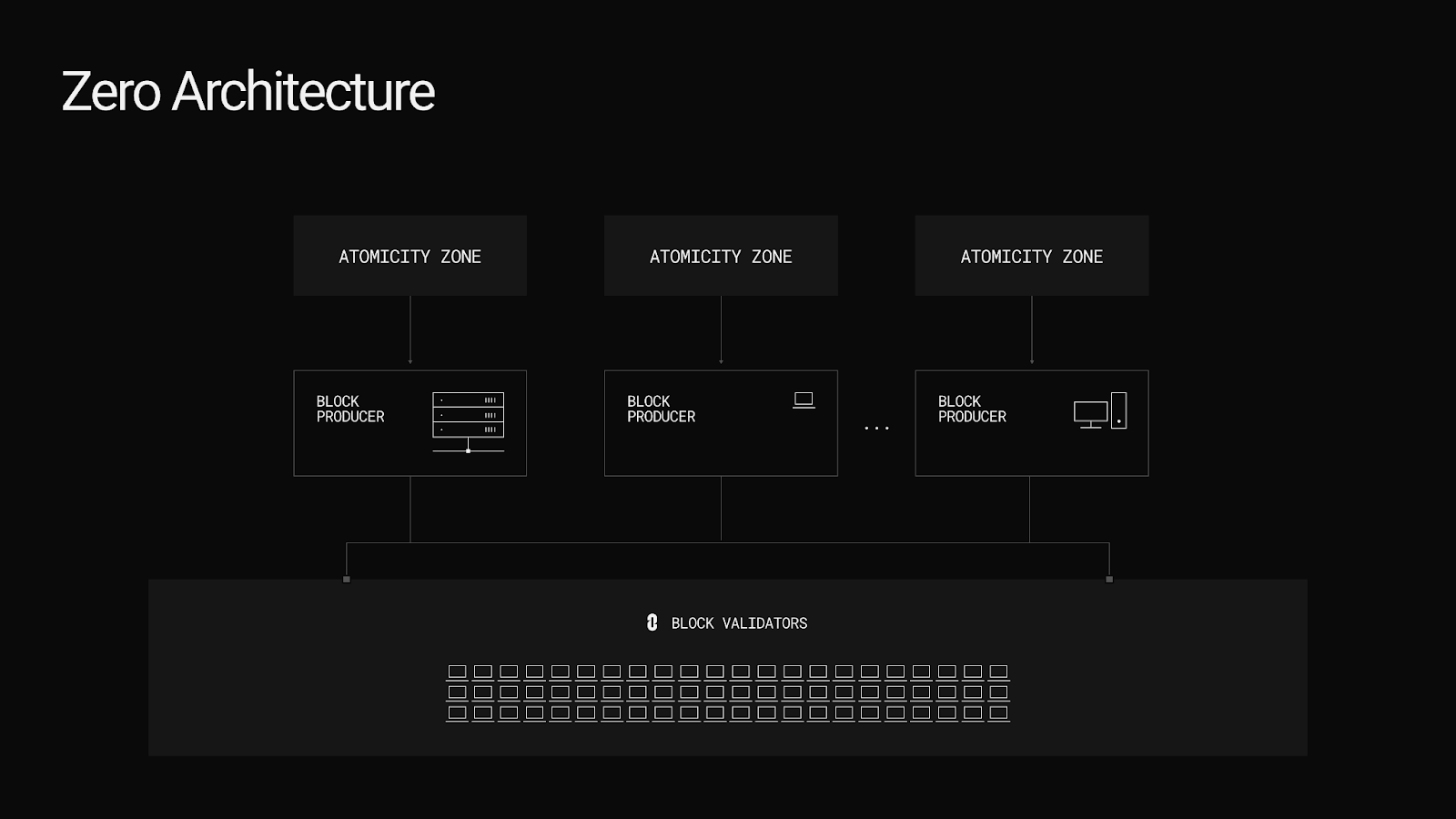
ส่วนวิธีการทำงาน แต่ละ Zone มีลักษณะคล้าย EVM ของ Ethereum แต่ไม่ใช่ Rollups ที่ทำงานแยกกัน แต่เป็น Zones ที่ทำงาน Parallel บน Protocol เดียวกัน โดยแต่ละ Zone คือ Core ที่รันพร้อมกันแบบอิสระ (เปรียบเหมือน CPU ที่กระโดดจาก Single-core เป็น Multi-core)
สำหรับในส่วนของ Developer ที่ต้องการมาสร้างบน Zero นั้นไม่ต้องสร้าง Zones ของตัวเอง แค่สร้าง Applications บน Zones ที่ Zero จัดเตรียมไว้ให้เท่านั้น
ความน่าสนใจของประกาศนี้ไม่ได้อยู่ที่ตัวเทคโนโลยีเพียงอย่างเดียว แต่อยู่ที่ Partner ระดับสถาบันการเงินและยักษ์ใหญ่ด้านเทคโนโลยีที่เข้ามาสนับสนุน:
โครงสร้างพื้นฐานระดับโลก: ได้จับมือเป็น Partner กับ Google Cloud และ DTCC (The Depository Trust and Clearing Corporation)
การที่ Zero มี Partner ระดับโลกเหล่านี้ไม่ได้เป็นเพียงเรื่องของการระดมทุนเท่านั้น แต่คาดว่าน่าจะมีประโยชน์ต่อโปรเจกต์ในระดับกลยุทธ์ เช่น
Citadel Securities คือหนึ่งในผู้เล่นที่สำคัญในตลาดหุ้นสหรัฐฯ ซึ่งการร่วมมือครั้งนี้จะเป็นการช่วย LayerZero นำเทคโนโลยีบล็อกเชนมาปรับใช้กับระบบ Trading, Clearing, Settlement ที่ต้องการประสิทธิภาพสูง
Google Cloud ร่วมมือกับ LayerZero เพื่อศึกษาการชำระเงินรายย่อย (Micropayments) บนบล็อกเชนและการซื้อขาย Resource สำหรับ AI agents
DTCC กำลังศึกษาการนำ Infrastructure ของบล็อกเชน Zero มาใช้เพื่อเพิ่มขีดความสามารถในการ Scalability ให้กับบริการ Tokenization และระบบ Collateral App Chain ของตัวเอง
ICE (บริษัทแม่ของ NYSE) กำลังศึกษาการนำบล็อกเชน Zero มาใช้ปรับปรุงระบบ Trading & Clearing เพื่อรองรับการเปิดตลาดซื้อขายแบบ 24/7 และการนำสินทรัพย์ดิจิทัล (Tokenized Collateral) มาใช้เป็นหลักประกันในอนาคต
Cathie Wood เข้ามาเป็นทั้งผู้ถือหุ้นและที่ปรึกษา โดยให้ความเห็นว่า Zero เป็นจุดตัดของ "การเงิน" และ "อินเทอร์เน็ต" ที่จะสร้างโอกาสใหม่ๆ แบบที่ไม่เคยมีมาก่อน
Zero ประกาศแผนเปิดตัว Mainnet ในช่วง Fall ปี 2026 (ประมาณ กันยายน-พฤศจิกายน 2026) ซึ่งหมายความว่ามีเวลาพัฒนาและทดสอบระบบประมาณ 7-9 เดือนจากวันที่ประกาศ
โดย Zero วางแผนจะเปิดตัว 3 Zones แรก คือ
การเปิดตัว Zero ถือเป็นหนึ่งในประกาศที่น่าสนใจที่สุดในวงการ Layer 1 Blockchain ในรอบหลายเดือน ด้วยการนำเสนอแนวคิด Multi-Core World Computer ที่เน้นแก้ปัญหาพื้นฐานของบล็อคเชน และที่สำคัญคือการได้รับการสนับสนุนจากผู้เล่นระดับโลกทั้งจาก TradFi และ Web2 อย่าง Citadel Securities, DTCC, ICE, Google Cloud และ ARK Invest
จุดแข็ง:
Zero มาพร้อมกับ Value Proposition ที่ชัดเจน คือการเป็นบล็อคเชนที่มีความ decentralized เทียบเท่า Ethereum แต่มี Performance เทียบเท่า Solana โดยอ้างว่าสามารถทำ 2 ล้าน TPS ต่อ Zone พร้อมลดต้นทุนการรันเครือข่ายลงจาก $50M เหลือ <$1M ต่อปี
นอกจากนี้การมี Partnerships กับสถาบันการเงินและเทคโนโลยีระดับโลกทำให้ Zero มีศักยภาพในการเป็นสะพานเชื่อม TradFi เข้ากับบล็อคเชนได้จริง โดยเฉพาะในยุคที่ Tokenization กำลังได้รับความสนใจมากขึ้น
ความเสี่ยงที่ต้องพิจารณา:
อย่างไรก็ตาม ยังมีความเสี่ยงหลายอย่างที่ควรระวัง อย่างแรกคือ Execution Risk เพราะการพัฒนาเทคโนโลยีมีความซับซ้อน ซึ่งจนกว่าจะผ่านกาทดสอบและเปิดตัว Mainnet ยังต้องผ่านการพิสูจน์อีกมาก รวมถึงต้องดูด้วยว่าจะสามารถทำ Performance ตามที่เคลมได้หรือไม่ เพราะการไปให้ถึง 2 ล้าน TPS ได้นั้นถือว่าไม่ใช่เรื่องง่ายเลย
นอกจากนี้ ยังมีความเสี่ยงเรื่อง TradFi Adoption ที่มักใช้เวลานานและต้องผ่านกฎระเบียบมากมาย อีกหนึ่งความเสี่ยงที่ปฎิเสธไม่ได้คือ Competition Risk เพราะตลาด L1 มีการแข่งขันสูงมาก โดยบล็อคเชนอื่นๆ อย่าง Canton Network, Solana, Sui, Aptos ก็มี TradFi Partnerships และ Performance ที่ดีเช่นกัน การที่ Zero จะประสบความสำเร็จได้ยังถือว่าต้องผ่านอีกหลายด่าน
___________________________________________________________________________________________________________________
Last week, LayerZero made a major announcement that garnered significant attention by unveiling "Zero," its own Layer 1 blockchain project based on the "Multi-core World Computer" concept. It features a speed of 2M TPS, which is 100,000 times faster than Ethereum and 500 times faster than Solana.
Let’s explore Zero’s backend technology and what makes it interesting.
Zero Tech TLDR:
Deep Dive into Zero’s Tech: The Multi-Core World Computer
Fundamental Problems of General Blockchains According to Zero's analysis, current blockchains like Ethereum or Solana suffer from Homogeneous architecture, where every validator must download and execute every transaction identically. Consequently, they cannot scale without sacrificing decentralization.
Ethereum chooses to maintain decentralization by limiting hardware requirements, resulting in slowness and high gas fees. Meanwhile, Solana opts for very high hardware requirements for performance, sacrificing decentralization in the process.
LayerZero heavily criticized Ethereum for "lying to the world" by pushing a Layer 2-centric roadmap, claiming L2s can inherit the security and decentralization of the L1. In reality, they argue this is impossible: if an L2 is truly decentralized, it cannot be easily evolved; conversely, if an L2 is upgradeable, it remains centralized.
LayerZero views Ethereum’s 2020 shift toward a Layer 2-centric roadmap as an abandonment of its original principles (decentralization) for survival, pushing users toward centralized L2 chains while labeling it as "scaling."
This served as the starting point for LayerZero to create "Zero."
To address these issues, Zero has developed a new approach that integrates Zero-Knowledge technology with infrastructure restructuring to enhance system efficiency. The focus is on reducing redundant workloads while maintaining decentralization. Its core operational principles can be summarized into four points:
2. Heterogeneous Architecture: ZK Proofs alone may not be enough to solve the problem, so Zero transitions from a Homogeneous to a Heterogeneous Architecture. This separates roles into two groups: Block Producers and Block Validators (decoupling Execution from Validation). This reduces the burden on Validators and cuts the cost of running a blockchain of Ethereum's scale from $50M to less than $1M per year.
3. Decentralization: Zero utilizes a Delegated PoS system with no minimum stake and automatic slashing. It also employs a Senator Model, bringing in domain experts (such as cryptographers or economists) to help guide the project's direction. Users can delegate their votes to the Senator of their choice.
4. Multi-Core World Computer: Most current blockchains operate like a single-core processor (handling one task at a time with every node repeating the same work). In contrast, Zero can run multiple applications simultaneously through various Atomicity Zones. This allows it to handle a massive volume of transactions, similar to upgrading from a single-core to a multi-core CPU.
Zero's goal is to create a blockchain as decentralized as Ethereum but as fast as Solana by simultaneously solving four key bottlenecks:
Zero divides its operations into Atomicity Zones that run in parallel, much like cores in a computer CPU. These zones are not independent like Layer 2s; they are all governed under the same unified security protocol. Each individual zone has a capacity of 2 million transactions per second.
In terms of operation, each Zone functions similarly to Ethereum’s EVM but they are not rollups operating in isolation. Instead, they are parallel zones within the same protocol, acting as independent cores that run simultaneously. Think of it as a CPU evolving from single-core to multi-core processing.
For developers interested in building on Zero, there is no need to create your own individual zone; you can simply deploy applications on the existing zones provided by Zero.
The impact of this announcement lies not only in the technology but also in the backing from major financial institutions and tech giants:
The fact that Zero has these world-class partners is not just about fundraising; it is expected to benefit the project strategically in several ways:
Zero has announced its Mainnet launch for Fall 2026 (approximately September–November 2026), allowing for 7–9 months of development and testing from the announcement date.
Zero plans to launch with its first three Zones:
The unveiling of Zero is one of the most compelling Layer 1 announcements in months. It introduces the "Multi-Core World Computer" concept to solve fundamental blockchain issues, backed by global giants across TradFi and Web2.
Strengths: Zero offers a clear value proposition: decentralization equivalent to Ethereum with performance matching Solana. It claims 2 million TPS per zone while reducing network operating costs from $50M to less than $1M per year. Furthermore, its high-level partnerships position Zero as a viable bridge for TradFi, especially as interest in tokenization grows.
Risks to Consider:


.png)

.jpg)
.jpg)


